Travel and Tinsel contains affiliate links and is a member of the Amazon LLC Associates Program. If you make a purchase using one of these Amazon links, we may receive compensation at no extra cost to you. Read my disclaimer for more information.
European Christmas markets are one of the most magical travel experiences of the holiday season. Historic town squares fill with wooden stalls, glowing lights, and the smell of warm food and spices in the air.
I have visited several Christmas markets across Europe, and each one feels a little different. Some are large city markets with dozens of stalls, while others feel smaller and more traditional in historic cathedral squares.
One thing that surprised me was how many markets you can visit in one trip. Many cities are close together and easy to reach by train.
If you have never visited before, planning a Christmas market trip can feel overwhelming. Although I had traveled to Europe before, I had never gone during Christmas. I had no idea what to expect on my first visit. After that first trip, I was hooked.
Even if you have visited Christmas markets before, planning your own itinerary across multiple cities can still take some strategy. Choosing the right regions, transportation, and timing can make a big difference in how much you enjoy the trip.
This European Christmas markets guide will help you plan your itinerary, understand how the markets work, and decide where to go. You will also find practical tips on what to eat, what to buy, what to wear, and how to make the most of your Christmas market trip.
🎄 European Christmas Markets At a Glance
Best Time to Visit: Late November through December 23
Typical Trip Length: 7 to 14 days (10 days ideal from the U.S.)
Best Regions: Germany, Austria, Alsace (France), and Switzerland
How to Get Around: Train travel between cities with easy day trips
Top Foods to Try: Bratwurst, raclette, Lebkuchen, and glühwein
Typical Cost to Enter: Most Christmas markets are free
Fun Souvenir: Collectible glühwein mugs from each market
What Are European Christmas Markets?
European Christmas markets are outdoor holiday markets held in town squares during the Advent season. They are especially common in Germany, Austria, Switzerland, and parts of France.
Most markets take place in historic city centers where wooden stalls fill the main square. Some stalls focus on food and drinks, while others sell ornaments, candles, and handmade gifts.
Large cities often host several markets across different neighborhoods. Smaller towns may have one main market in the central square.
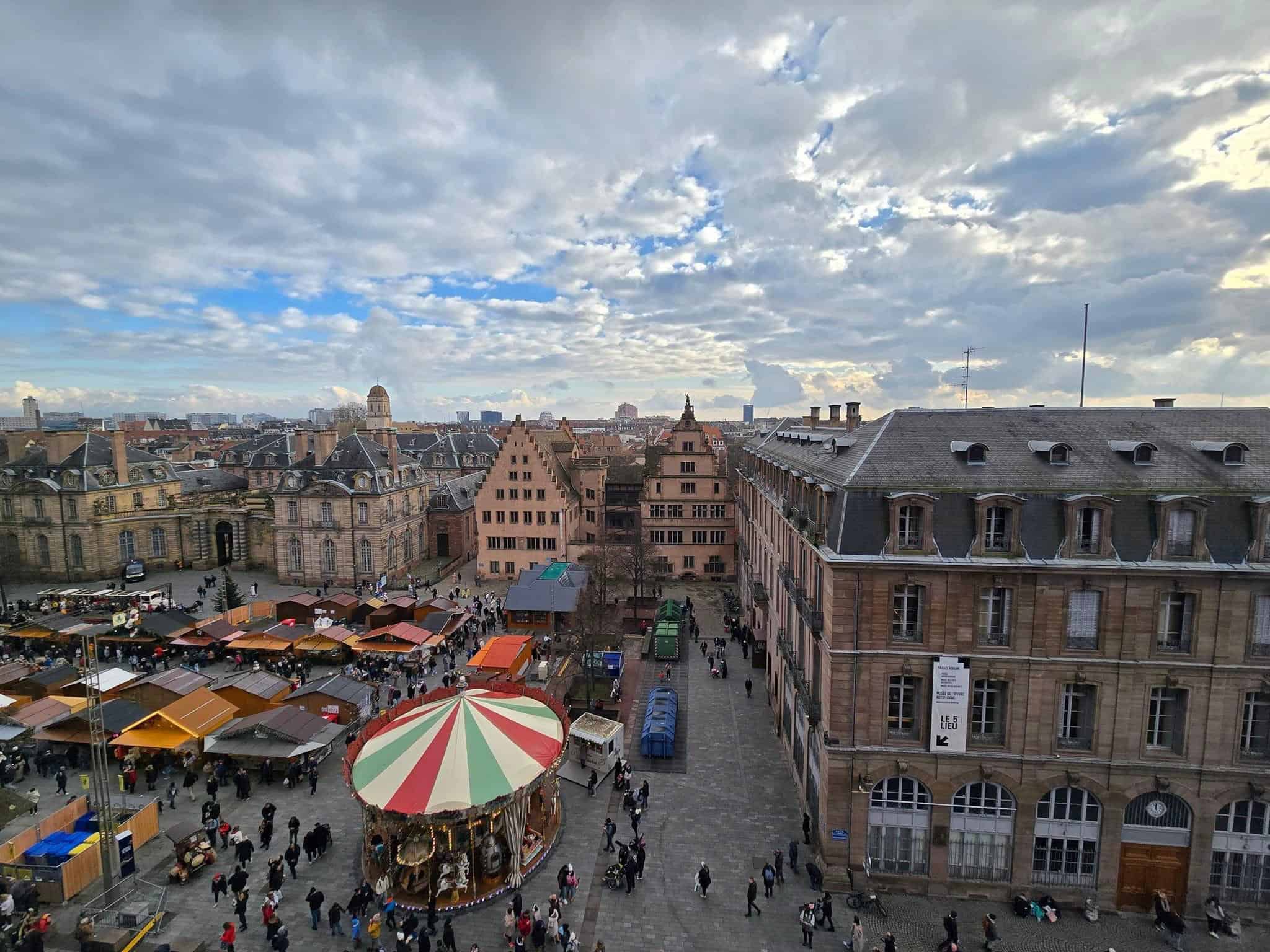
The tradition dates back several centuries in German speaking regions of Europe. Today the markets still feel very local, with families gathering around warm drinks, vendors selling traditional foods and crafts, and small holiday performances in the square.
Many markets also feature Advent traditions such as Christkind ceremonies or Krampus events in Alpine regions.
That mix of history, food, lights, and atmosphere is what makes European Christmas markets so special.
When Do Christmas Markets Start?
Most European Christmas markets open in late November and run through December 23 or December 24. Some markets will run into early January. The markets are tied to the Advent season, which begins four Sundays before Christmas.
Exact dates vary by city, so it is always best to check the official market website before your trip.
Early Opening Markets
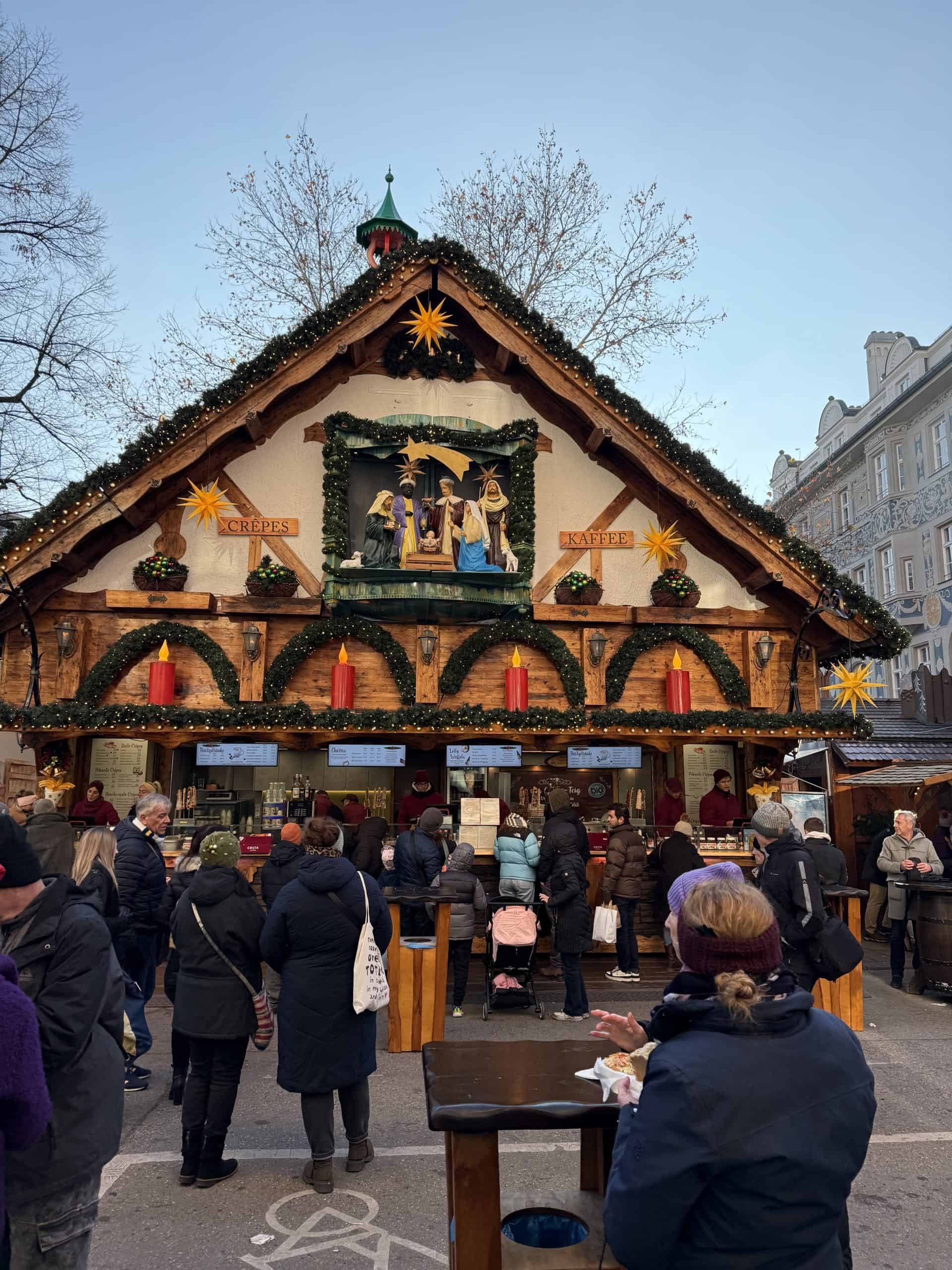
Some cities including Vienna, Cologne, and Paris open earlier than most. These earlier openings can be helpful if you plan to start your Christmas market trip sooner.
Black Sunday Closures
If you visit early in the season, you may encounter Black Sunday.
In parts of Germany and Austria, the Sunday before Advent is observed as a quiet religious day. Some markets close on this Sunday even if they opened earlier in the week.
Checking market schedules ahead of time will help avoid surprises.
How Much Time Do You Need?
If you are traveling from the United States, I recommend planning at least 10 days for a Christmas market trip. The flight alone takes a full day, and jet lag can slow you down the first couple of days.
Ten days allows enough time to visit several markets without feeling rushed. It also gives you time to explore the cities themselves, not just the markets.
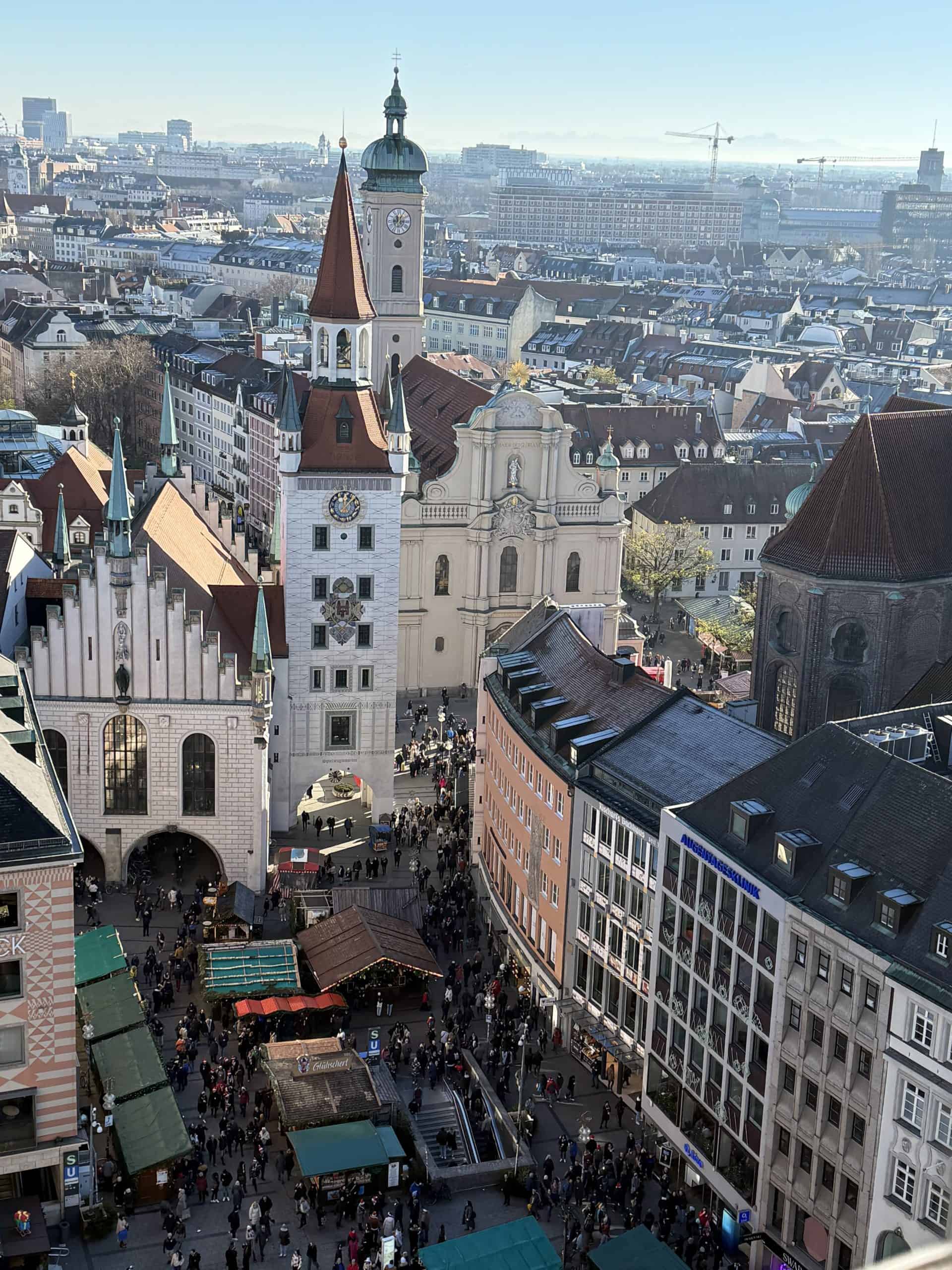
Many European cities hosting Christmas markets also have beautiful historic centers, museums, and landmarks worth seeing during the day.
If You Only Have One Week
With one week, it is best to focus on one region.
Choose cities that are close together and connected by train. This keeps travel time short and allows more time enjoying the markets.
🎄Pro Tip: The key to a successful Christmas market trip is not trying to see everything. Slow down, enjoy the atmosphere, and give yourself time to experience each city.
Best Regions for Christmas Markets in Europe
Europe has hundreds of Christmas markets, but several regions stand out for their festive atmosphere and high concentration of markets.
Here are some of the most popular regions:
Bavaria, Germany
Bavaria is one of the most popular regions for Christmas market trips. Cities like Munich and Nuremberg host some of the most famous markets in Germany.
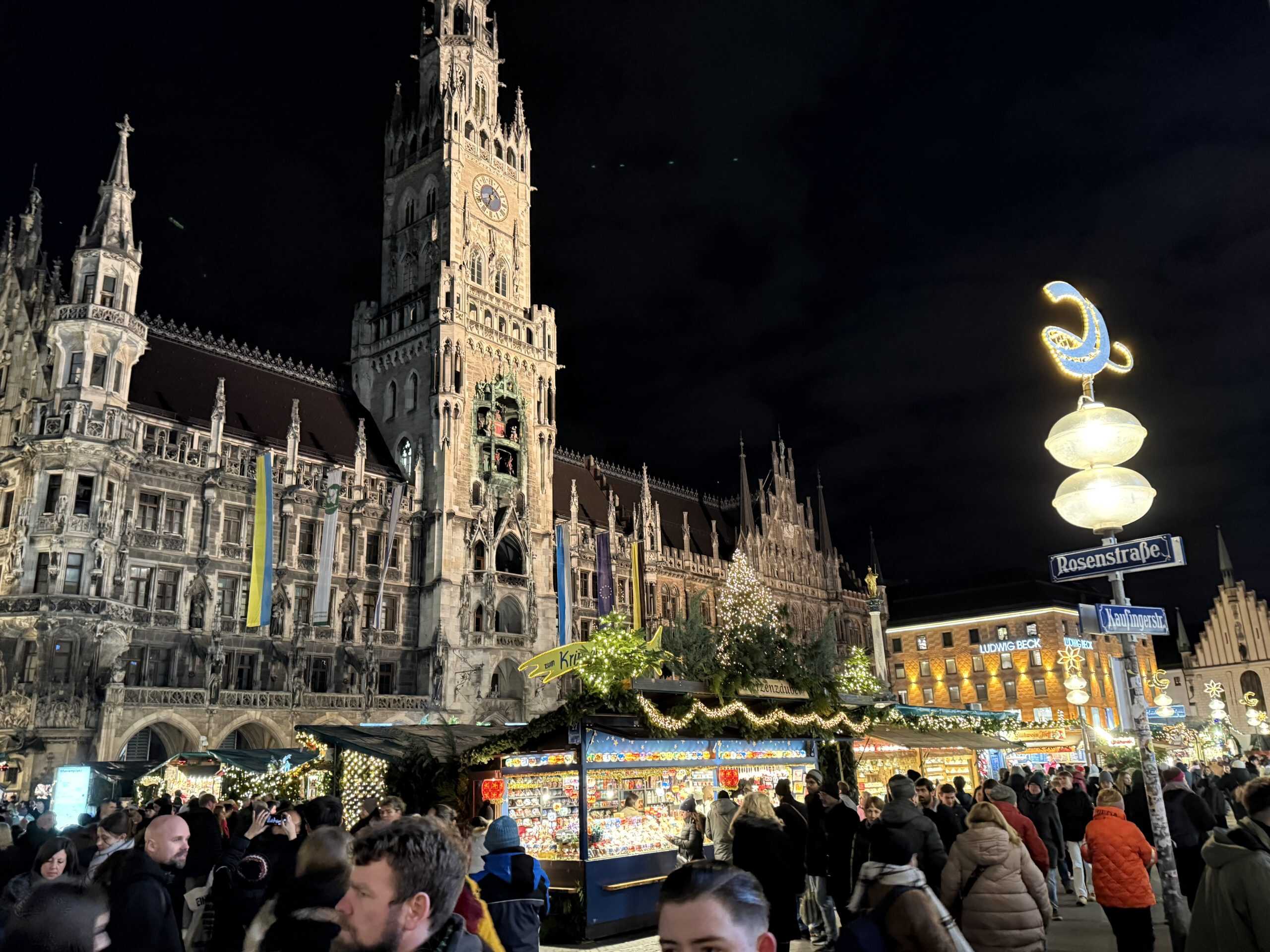
Munich works well as a home base because nearby cities such as Salzburg, Nuremberg, and Regensburg are easy train trips. We used Munich as a base to visit Salzburg and loved how simple the train connections were.
👉 Plan your visit with my guides to the Munich Christmas Markets and Salzburg Christmas Markets.
Austria
Austria is known for scenic Christmas markets set in historic squares with mountain backdrops.
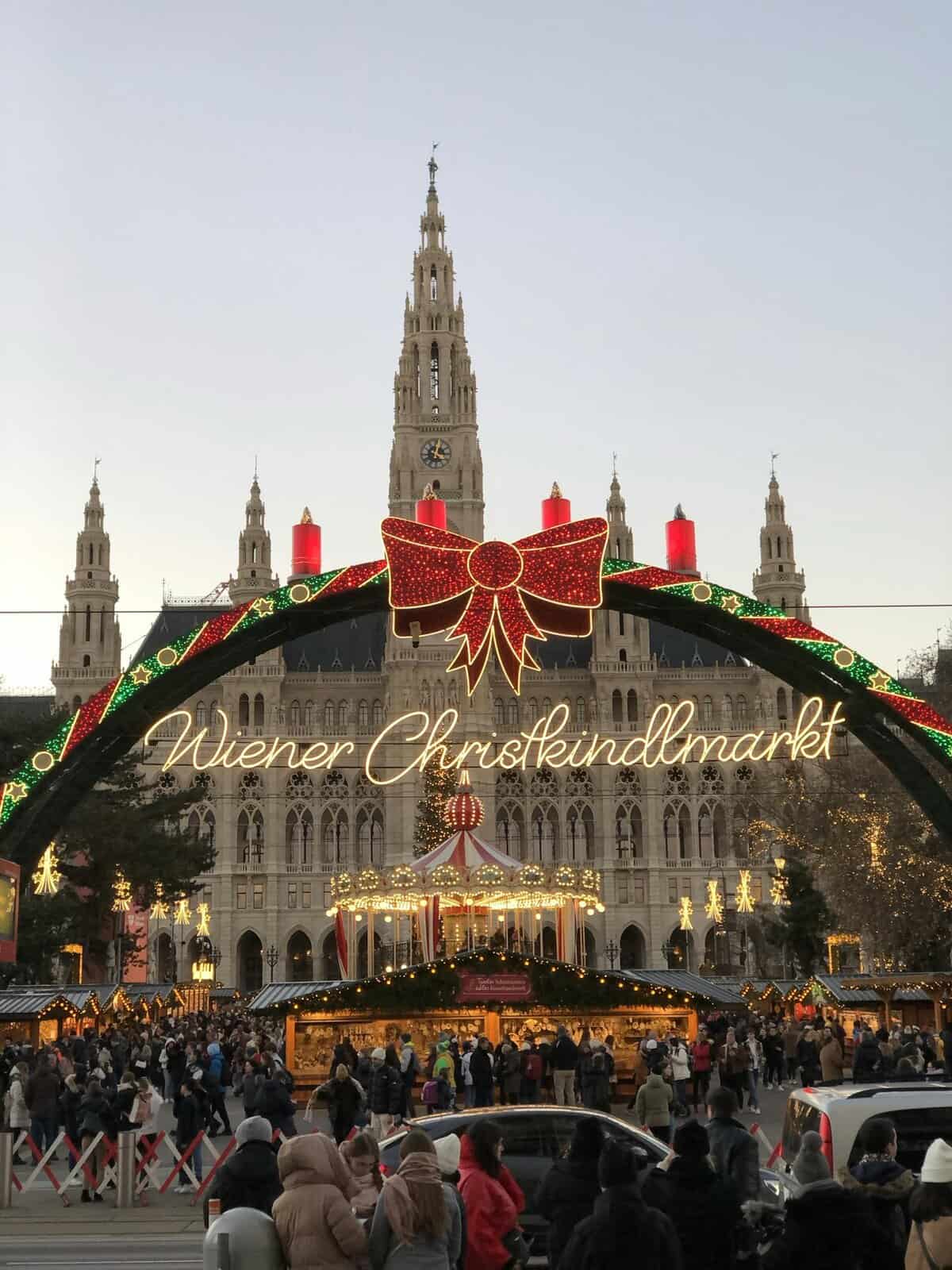
Vienna and Salzburg are two of the most famous destinations, and both cities host several markets throughout their historic centers.
👉 See my full guide to the Salzburg Christmas Markets for tips on what to see, eat, and experience.
Alsace Region of France
The Alsace region near the German border is famous for charming villages, festive decorations, and wine.
Strasbourg is known as the Capital of Christmas, with streets covered in lights and elaborate displays. My favorite was the famous teddy bear house.
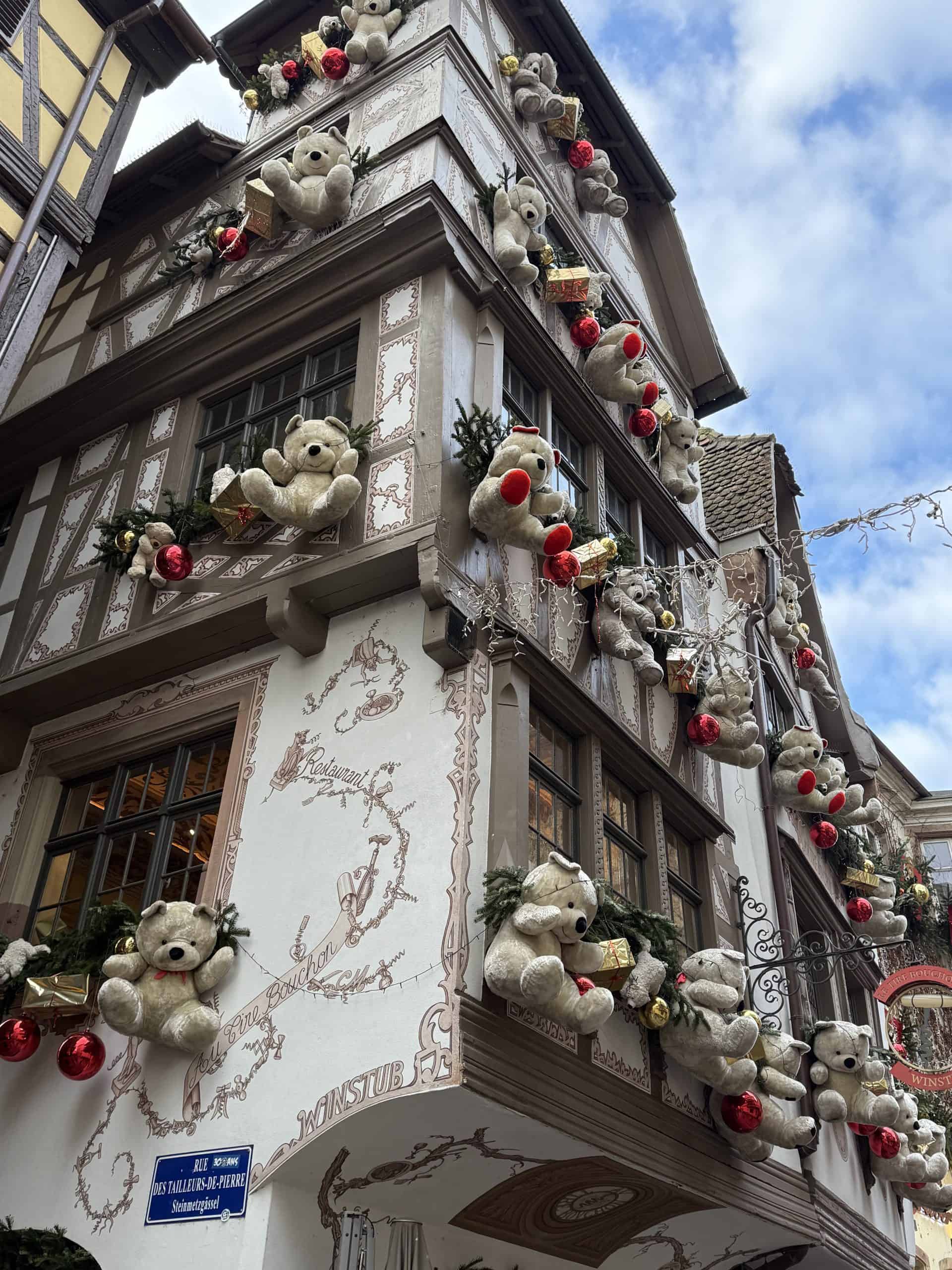
👉 Read my Strasbourg Christmas Market Guide to plan your visit.
The half timbered houses in Colmar are often said to have inspired the fairy tale village in Beauty and the Beast. Many towns in this region feel like fairy tales, especially during the Christmas season.
👉 See my Colmar Christmas Market Guide for what to see and do.
Switzerland
Switzerland offers beautiful Christmas markets set against Alpine scenery and lakeside cities. Zurich hosts one of the largest indoor markets inside the main train station and a popular Singing Christmas Tree.

👉 See my guide to the Zurich Christmas Markets for the best markets and tips.
Lucerne and Basel also host well known markets, and the Montreux market even features a flying Santa.
👉 Read my Basel Christmas Market Guide for tips on visiting the city’s markets.
👉 See my Montreux Christmas Market Guide for visiting tips along Lake Geneva.
Switzerland works especially well for train travel. We spent a week based in Zurich using the Swiss Travel Pass for several day trips, which made it easy to unpack once while still visiting multiple markets.
How to Plan a European Christmas Market Itinerary
One of the easiest ways to plan a Christmas market trip is to choose one or two home base cities. Stay several nights in one location, explore that city’s markets, and take day trips to nearby towns. This reduces how often you need to pack and unpack.
Many Christmas market destinations are close together, with train rides between cities often one to two hours.

This strategy lets you see several markets while still traveling at a relaxed pace.
Here are a few sample Christmas market itineraries to help you visualize how a trip might come together depending on how much time you have.
7 Day Christmas Market Itinerary
Munich Home Base
Munich is one of the best Christmas market bases in Europe. The city hosts multiple markets and has excellent train connections. Stay in Munich for several nights and take day trips to nearby markets.
Day trips from Munich include:
Salzburg, Austria
Train time: about 1 hour 25 minutes
Nuremberg, Germany
Train time: about 1 hour
Innsbruck, Austria
Train time: about 2 hours 15 minutes
These cities all host beautiful Christmas markets and are easy to visit in a single day.
👉 See more ideas in my Day Trips from Munich guide, since many of these cities also have Christmas markets.
10 Day Christmas Market Itinerary
Our Route: Munich → Zurich
This is the route we followed on our own Christmas market trip.
Example itinerary
Arrive in Munich
Stay 3 to 4 nights to explore Munich’s Christmas markets and main sights.
Day Trip: Munich → Salzburg, Austria
Train time: about 1 hour 25 minutes one way
Travel: Munich → Zurich
Train time: 3.5 to 4 hours
Stay 6 to 7 nights
From Zurich you can take easy day trips to several Christmas market cities.
Day Trip: Zurich → Lucerne
Train time: 50 minutes one way
Day Trip: Zurich → Montreux
Train time: 2.5 hours one way (with a change in Lucerne)
👉 Insider Tip: Take the panoramic train from Montreux to Lucerne. The route passes through Alpine villages, lakes, and dramatic mountain scenery.
Day Trip: Zurich → Basel
Train time: 1 hour one way
From Basel it is easy to visit Christmas markets in France. We visited Basel on one day trip and returned another day to explore both Colmar and Strasbourg.
Optional: Basel → Colmar → Strasbourg
Basel → Colmar: 45 minutes one way
Colmar → Strasbourg: 30 minutes one way
Return to Zurich via Basel.
🚆Pro Tip: We purchased the Alsa+ Pass at the Basel train station for unlimited travel within Alsace for 24 hours.
We also used one of our days in Zurich for Alpine adventures in Interlaken and Lauterbrunnen, and another day to visit the Lindt Chocolate Factory. This added variety to the trip while still keeping the focus on Christmas markets.
👉If you want to see exactly how I structured my trip, take a look at my 10-day Christmas market itinerary.
10 to 14 Day Christmas Market Itinerary
Classic Route: Munich → Salzburg → Vienna
This is one of the most classic Christmas market routes in Central Europe. The cities are close together, easy to reach by train, and each offers several beautiful markets.
Example itinerary
Arrive in Munich
Stay 3 to 4 nights to explore Munich’s Christmas markets and main sights.
Travel: Munich → Salzburg, Austria
Train time: about 1 hour 25 minutes
Stay 2 to 3 nights to enjoy Salzburg’s historic Old Town and several Christmas markets. Salzburg is also home to Mozart and the filming location for the Sound of Music.
👉 Explore more in my Salzburg Christmas Market Guide.
Travel: Salzburg → Vienna, Austria
Train time: about 2 hours 30 minutes
Stay 3 to 5 nights to explore Vienna’s famous markets, palaces, and festive squares.
Each of these cities hosts multiple Christmas markets, and the historic settings make them especially beautiful during the holiday season.
✈️ Travel Tip: This itinerary works well as an open-jaw trip. You can fly into Munich and home from Vienna, or return to Munich by train for your departure flight.
Tours and River Cruises
River cruises are another popular way to visit several Christmas markets in one trip. This style of travel simplifies planning since transportation and lodging are arranged.
Guided land tours are another option for travelers who prefer having the itinerary organized in advance while visiting several markets.
Getting Around Christmas Markets in Europe
Trains are the easiest way to travel between Christmas market cities in Europe. Major destinations are connected by fast and reliable rail networks, and many popular routes are less than two hours apart.
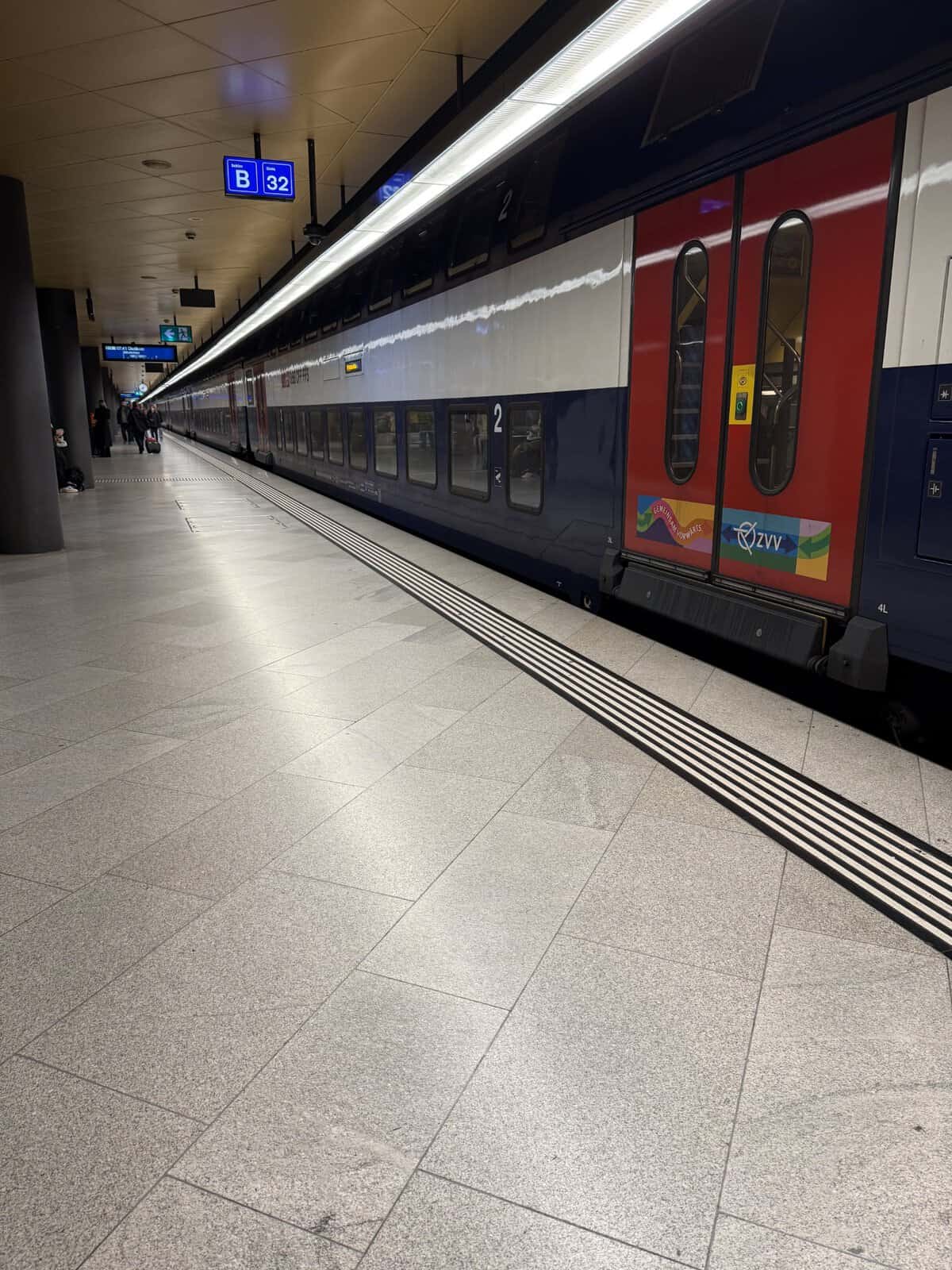
Train stations are usually located in city centers, making it easy to walk or take a short tram ride to the markets.
Point-to-Point Train Tickets
Many travelers use point-to-point tickets for individual train routes. This works well if you already know your travel dates and times.
Swiss Travel Pass
If you plan to spend several days exploring Switzerland, the Swiss Travel Pass can be very convenient.
We used the Swiss Travel Pass while based in Zurich and loved the flexibility. We could board trains easily for day trips without purchasing separate tickets each time. The pass also includes many buses, boats, and local transportation.
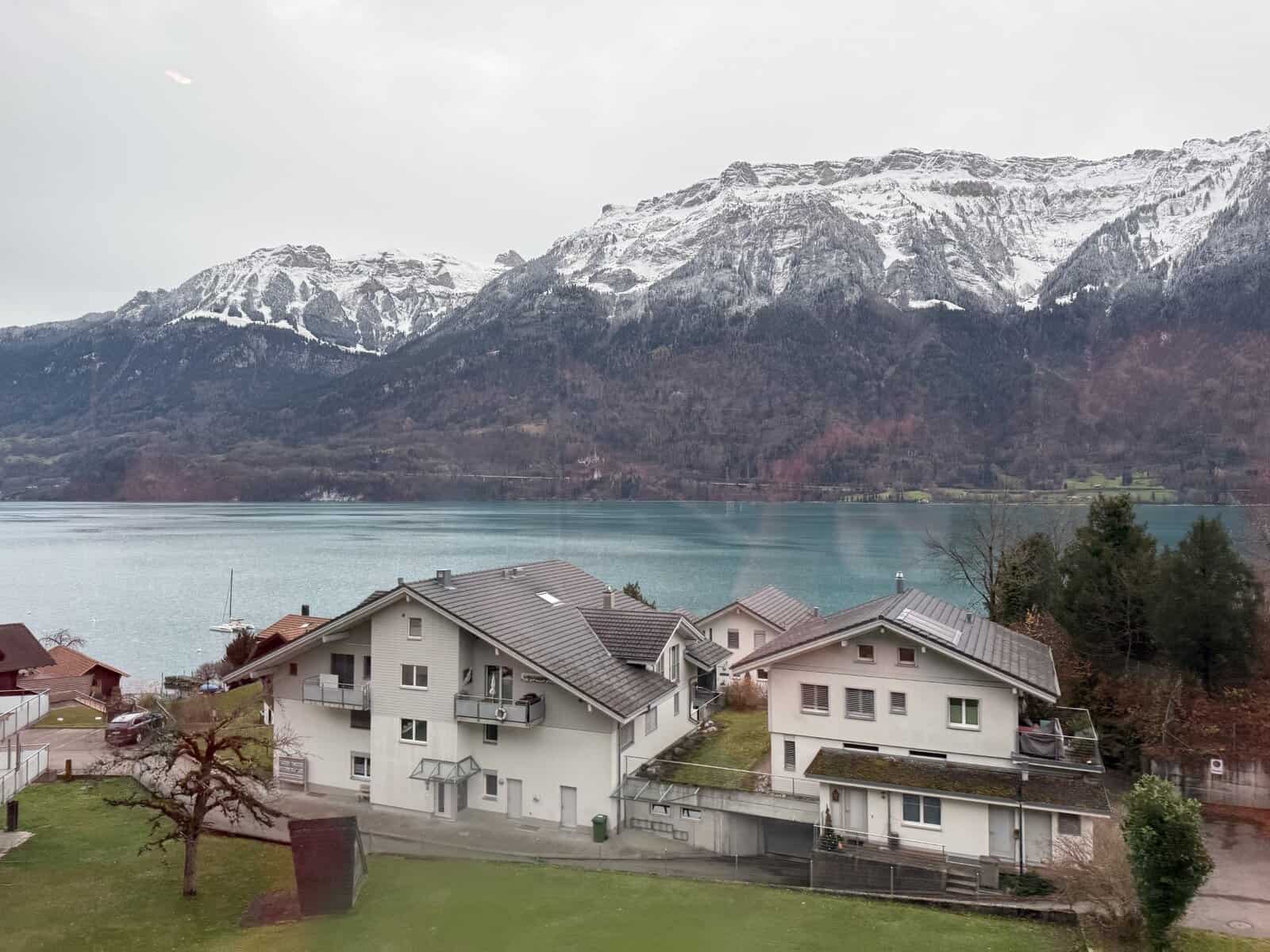
If you are considering it for your trip, read my guide on whether the Swiss Travel Pass is worth it.
Eurail Pass
The Eurail Pass is another option for travelers visiting multiple countries. It allows travel across many European rail networks with one pass.
Some trains require seat reservations for an additional fee.
Bayern Ticket
If you are traveling within Bavaria, the Bayern Ticket can be a useful option. This regional ticket allows unlimited travel on local trains throughout the region. The high speed trains are not included with this ticket.
A Few Train Tips
• Book longer routes in advance when possible
• Arrive at the station early to locate your platform
• Travel light since many stations have stairs or busy platforms
Rail apps also make it easy to check schedules and platforms. Helpful apps include:
• DB Navigator (Germany and much of Central Europe)
• ÖBB Scotty (Austria)
• SBB Mobile (Switzerland)
Once you understand the rail system, visiting multiple Christmas markets becomes very easy.
Renting a Car
While trains are usually the easiest way to travel between major cities, renting a car can be helpful in certain regions.
A car is especially useful if you want to visit smaller villages that are harder to reach by train. This is common in places like the Alsace region of France, the Romantic Road in Germany, or rural Alpine areas.
However, driving in large cities can be more challenging. Parking can be limited, and many historic centers restrict vehicle access.
For most travelers visiting popular Christmas market cities, trains remain the simplest and most convenient way to get around.
Practical Tips for Visiting Christmas Markets
Christmas markets are easy to enjoy once you understand how they work. A few simple tips can make the experience much smoother.
Understand the Mug Deposit System
Most Christmas markets serve warm drinks in reusable mugs instead of disposable cups. When you order glühwein or hot chocolate, you will pay a small deposit for the mug called Pfand.
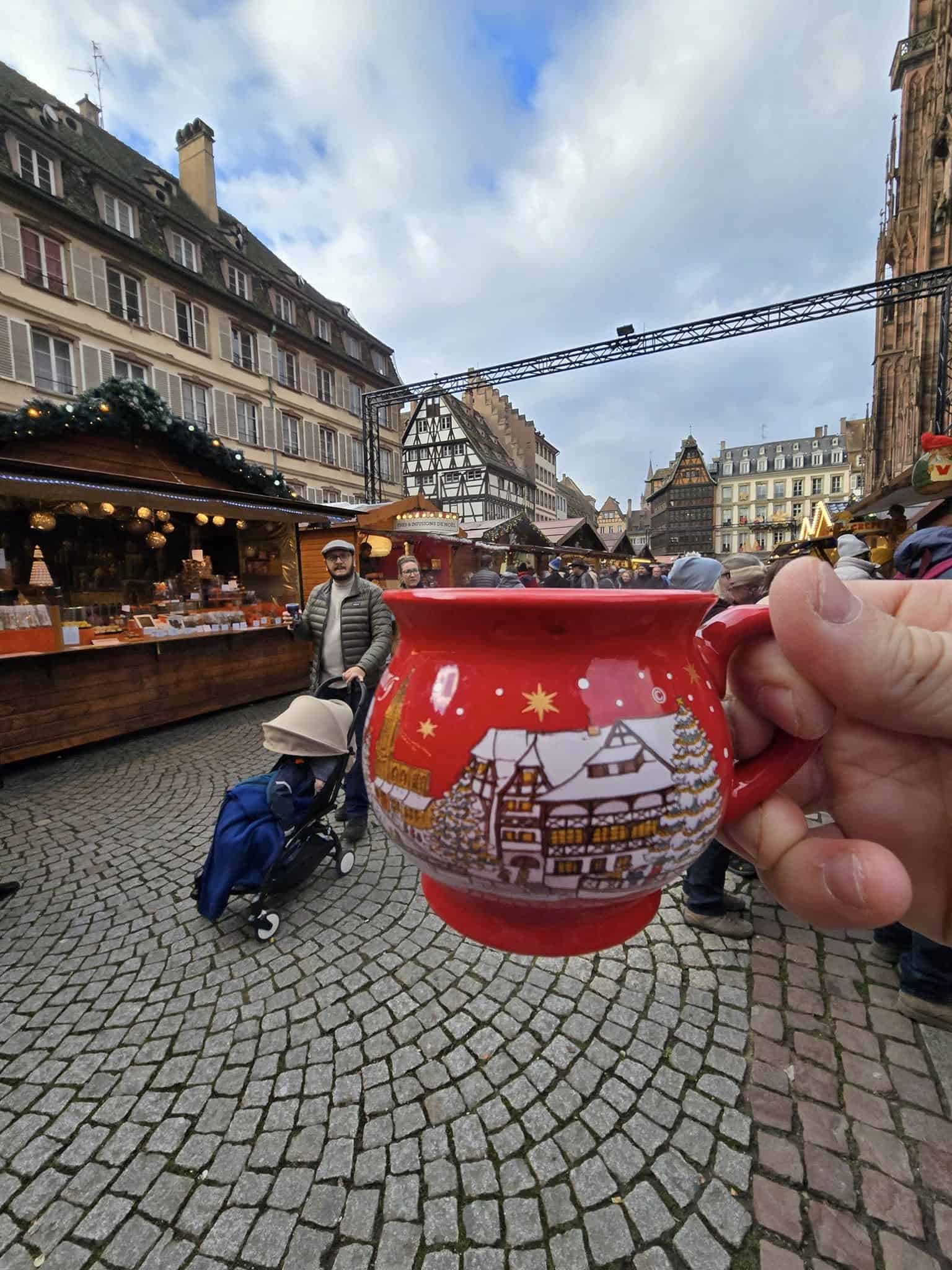
The deposit is usually a few euros. When you return the mug, you receive your deposit back. Many visitors keep the mug as a souvenir instead. Each city often has its own design. I kept all of mine, and they are still some of my favorite souvenirs.
Bring a Reusable Shopping Bag
Christmas markets are great places to shop for small gifts and souvenirs. A foldable tote or small backpack makes it easier to carry purchases as you explore. It can also be useful if you need to shed a layer or carry snacks and water.
Balance Daytime and Nighttime Visits
Christmas markets feel different during the day and at night. Daytime is calmer and easier for browsing stalls. At night the markets become more festive.
If you have time and energy, visiting the same market at both times of day is a great experience.
Expect Crowds at Popular Markets
Famous Christmas markets can become busy in the evening, especially on weekends. Arriving earlier in the afternoon often means smaller crowds and shorter food lines. Weekdays and earlier visits in the season are usually more relaxed.
Many Cities Offer Tourist Cards
Many European cities offer tourist cards that include public transportation and attraction discounts, such as the Munich City Card, Vienna Pass, or Zurich Card. These can make getting around easier while also saving money on museums and attractions.
Plan Time for the City Itself
Christmas markets are only part of the experience. Many of these cities also have historic centers, museums, churches, and palaces that are worth exploring during the day.
Cash Is Still Common at Christmas Markets
It is still best to carry some cash. Many stalls now accept credit cards, but smaller food vendors and craft stalls often prefer cash. ATMs are easy to find in most European cities.
What to Eat at European Christmas Markets
One of the biggest surprises on my first Christmas market trip was the food. I expected simple snacks, but many stalls prepare traditional regional dishes right in front of you.
Savory Foods to Try
Many markets feature regional specialties, though some foods appear almost everywhere.

Popular savory foods include:
Bratwurst – Grilled sausages that are one of the most common market foods.
Raclette – Melted cheese scraped over potatoes, bread, or pickles.
Pretzels – Soft Bavarian pretzels found throughout Germany and Austria, sometimes topped with cheese or butter.
Flammkuchen – An Alsatian-style flatbread topped with cream, onions, and bacon.
Sweet Treats
Christmas markets are also known for seasonal sweets.

Popular treats include:
Roasted almonds – Warm sugared almonds that create one of the most recognizable Christmas market scents.
Lebkuchen – Traditional German gingerbread cookies often sold in decorative shapes.
Waffles and pastries – Fresh waffles topped with powdered sugar, chocolate, or fruit.
Drinks to Try
Hot drinks are a big part of the Christmas market experience.

Glühwein – Warm mulled wine made with red wine, spices, and citrus. In France this is called vin chaud.
Kinderpunsch – A non-alcoholic spiced fruit punch popular with children and adults.
Hot chocolate – Often served rich and topped with whipped cream.
What to Buy at Christmas Markets
Christmas markets are wonderful places to shop for unique souvenirs and gifts. Many stalls focus on traditional holiday crafts and decorations that reflect local culture. One of my favorite parts of visiting different markets is seeing how the items change from city to city.

Handmade Holiday Decorations
Ornaments are one of the most popular things to buy at Christmas markets. Many stalls sell hand painted glass ornaments, wooden decorations, and small nativity scenes that make meaningful souvenirs and easy gifts to pack.
Nutcrackers and wooden figurines are also common, especially in Germany and Austria.
Candles and Seasonal Decorations
Hand poured candles, Advent decorations, and festive table décor are widely available.
You will also see star lanterns, carved wooden scenes, and delicate paper decorations that feel very traditional.
Winter Accessories
Many stalls also sell cozy winter accessories such as scarves, hats, gloves, and wool socks. These items are practical for cold evenings at the markets and make great gifts or souvenirs from your trip.
💡 Insider Tip: You will find both handmade crafts and mass-produced souvenirs at Christmas markets. If the same item appears at multiple stalls or in large stacks, it is usually mass produced. I personally enjoyed buying a mix of both.
What to Wear to European Christmas Markets
Most Christmas markets take place outdoors during winter, so dressing warmly makes a big difference in how much you enjoy the experience.
Layering is the easiest way to stay comfortable while exploring the markets.
Start with Warm Layers
Begin with a base layer and add sweaters or insulated layers on top. A warm winter coat is essential, especially if you plan to spend several hours outside. A waterproof coat is even better in case of rain or snow.
Bring Winter Accessories
Small accessories make a big difference in cold weather.
Consider packing:
- Gloves
- A warm hat
- A scarf
- Warm socks
These items help protect you from wind and cold temperatures while walking through the markets.
Wear Comfortable Shoes
You will likely spend a lot of time walking and standing. Many historic city centers have uneven cobblestone streets, so comfortable shoes or boots with good traction work best. Water resistant shoes can also be helpful if there is rain or snow.
For more packing tips, see my guide on what to wear in Europe in winter, where I share detailed cold-weather packing advice.
Special Christmas Traditions to Look For
Christmas markets are not only about food, lights, and shopping. Many cities also include seasonal traditions and performances that add to the festive atmosphere.
Christkind
In several German speaking regions, the Christkind represents the spirit of Christmas. The Christkind is often portrayed as a young figure dressed in gold robes with a crown and wings.
Some cities hold special ceremonies where the Christkind officially opens the Christmas market. One of the most famous examples takes place in Nuremberg, where the Christkind appears on a balcony overlooking the main square to deliver the opening speech.
Krampus
Another tradition you may encounter is Krampus, a figure from Alpine folklore.

Krampus accompanies St. Nicholas and is meant to scare away bad behavior. In parts of Austria and southern Germany, towns host Krampus runs in early December, where participants wear elaborate masks, horns, and bells and parade through the streets.
If you want to see one in person, read my guide to the Salzburg Krampus Run.
Holiday Choirs and Performances
Many Christmas markets host seasonal performances throughout the Advent season. You may see small choirs singing traditional carols, brass bands playing holiday music, or school groups performing in the main square.

One of my favorite moments was in Zurich, singing Christmas carols with strangers beneath the city’s Singing Christmas Tree. Even without knowing anyone around you, the music creates a magical shared holiday moment.
Light Shows
Some markets and city squares also feature festive light displays or projections on historic buildings. These shows often run several times in the evening and add another magical element to the Christmas market atmosphere.
Common Christmas Market Trip Travel Mistakes
Christmas markets are easy to enjoy. Here are a few common mistakes to avoid to make the experience even smoother.
Trying to Visit Too Many Cities
Markets may look close together on a map, but constant travel can quickly become exhausting. Choose a few cities and explore nearby markets with day trips.
Only Visiting the Markets at Night
Evenings are magical, but daytime visits are often less crowded and better for browsing and shopping.
Packing Too Much
Many Christmas market cities are easy to explore on foot or by train. Packing light makes train travel and hotel moves much easier.
Not Packing Warm Enough Clothing
Most Christmas markets take place outdoors, often in cold evening temperatures. Warm layers, gloves, and comfortable shoes make a big difference.
Not Bringing a Shopping Bag
Christmas markets are full of small gifts and souvenirs. A reusable bag or small backpack makes it easier to carry purchases.
FAQs
Here are answers to the most common questions I get about Christmas Market Trip planning.
Are Christmas markets open on Sundays?
Yes. Christmas markets are usually open on Sundays and often feel busiest on weekend evenings.
However, many retail shops and grocery stores close on Sundays in countries like Germany, Austria, and Switzerland. Train stations usually still have open shops and restaurants.
Will there be snow at Christmas markets?
Snow is possible, but it is not guaranteed. Some years markets have beautiful snowy scenes, while other years temperatures stay above freezing. Cities near the Alps such as Salzburg or Innsbruck have a higher chance of snow.
Even without snow, the lights, decorations, and atmosphere still feel very festive.
Do you need to speak the local language to visit Christmas markets?
No. You do not need to speak the local language to enjoy Christmas markets. In most major cities and tourist areas, many vendors speak at least some English. Ordering food and drinks is usually very easy.
However, a few simple words like hello, thank you, or please are always appreciated, but visitors generally have no trouble getting around.
Do Christmas markets have an entry fee?
Most Christmas markets are free to enter. You only pay for the food, drinks, or items you choose to buy. Some special attractions, rides, or indoor events may charge a small fee.
Are there bathrooms at Christmas markets?
Most Christmas markets have bathrooms available nearby. Visitors can also use restrooms in cafés, restaurants, shopping centers, or train stations close to the market. If you stop in a café or restaurant, it is customary to purchase something small.
Public toilets near the main square or inside shopping centers sometimes require a small fee, usually around €0.50 to €1.
💡 Insider Tip: Hotel lobbies can also be a convenient free option for restrooms.
What is the most Christmassy place to visit in Europe?
Several cities are famous for their Christmas markets.
Some of the most popular include:
Nuremberg, Germany
Strasbourg, France
Vienna, Austria
Cologne, Germany
Each has its own style, but all offer beautiful historic settings and traditional markets.
Are Christmas markets family friendly?
Yes. Most Christmas markets are very family friendly. Many include small rides, carousels, and seasonal activities. Non alcoholic drinks like Kinderpunsch and hot chocolate are also widely available.
Final Thoughts
Visiting Christmas markets in Europe is one of the most memorable ways to experience the holiday season. Historic squares glow with lights, the smell of warm food fills the air, and centuries old traditions come to life.
For many travelers, the number of markets and cities can feel overwhelming. The best approach is to slow down and enjoy the experience rather than trying to see everything.
Choose a few cities that are close together, stay several nights in one place, and take day trips when possible. This allows you to explore the city itself while still visiting several markets.
Some of my favorite moments were not the big landmarks. They were simple things like walking through a square filled with lights, warming up with a mug of glühwein, or hearing a choir singing holiday music nearby.
Once you experience your first European Christmas market trip, it is easy to understand why so many travelers return year after year.
I hope you found this Ultimate Guide to European Christmas Markets helpful for how to plan a Christmas market trip . Drop me an email if you have any questions. TravelandTinsel@gmail.com I love to hear from readers.
You can guides to all the markets I’ve visited here:
