
Travel and Tinsel contains affiliate links and is a member of the Amazon LLC Associates Program. If you make a purchase using one of these Amazon links, we may receive compensation at no extra cost to you. Read my disclaimer for more information.
Munich has been shaped for centuries by Bavarian royalty, grand churches, and a beer culture that is still very much part of daily life today. Historic beer halls founded in the 1500s and the rebuilt Old Town squares help define the city’s character.
My favorite part of Munich was how the city blends tradition and modern life in a way that is easy to appreciate even on a short visit.
We visited during Christmas market season and had three full days to explore the Old Town, take day trips, and enjoy festivities.
How you structure your visit will depend on what interests you most. Some travelers will want to focus on historic sights and museums, while others may prioritize beer halls, parks, or day trips into Bavaria.
If you visit during Christmas market season, allow extra time to explore the markets. Prioritizing the Old Town or starting with a walking tour can also help you make the most of a short visit.
In this guide, I explain how to spend two days in Munich, expanding on the route from my One Day in Munich Itinerary. I will also include an optional third day if you want to add a day trip or explore more of Bavaria.
If you are planning to explore beyond the city, you may also want to read my guide to the best day trips from Munich.
2 Days in Munich At a Glance
Top Highlights: Marienplatz, Old Town, royal palaces, and beer halls.
Recommended Tour: Old Town Walking Tour or Beer and Bites
Getting Around: Walkable Old Town, plus excellent public transportation.
Where to Stay: Old Town or near Munich Central train station
Best Time to Visit: Spring and fall for pleasant weather, winter for Christmas markets, or late September for Oktoberfest.
Best Discount Card: Munich City Card includes unlimited transit and attraction discounts.
Can You See Munich in Two Days?
Yes, two days is enough time to see many of Munich’s highlights. The Old Town is compact and walkable, making it easy to visit Marienplatz, the Frauenkirche, and Viktualienmarkt in one day.
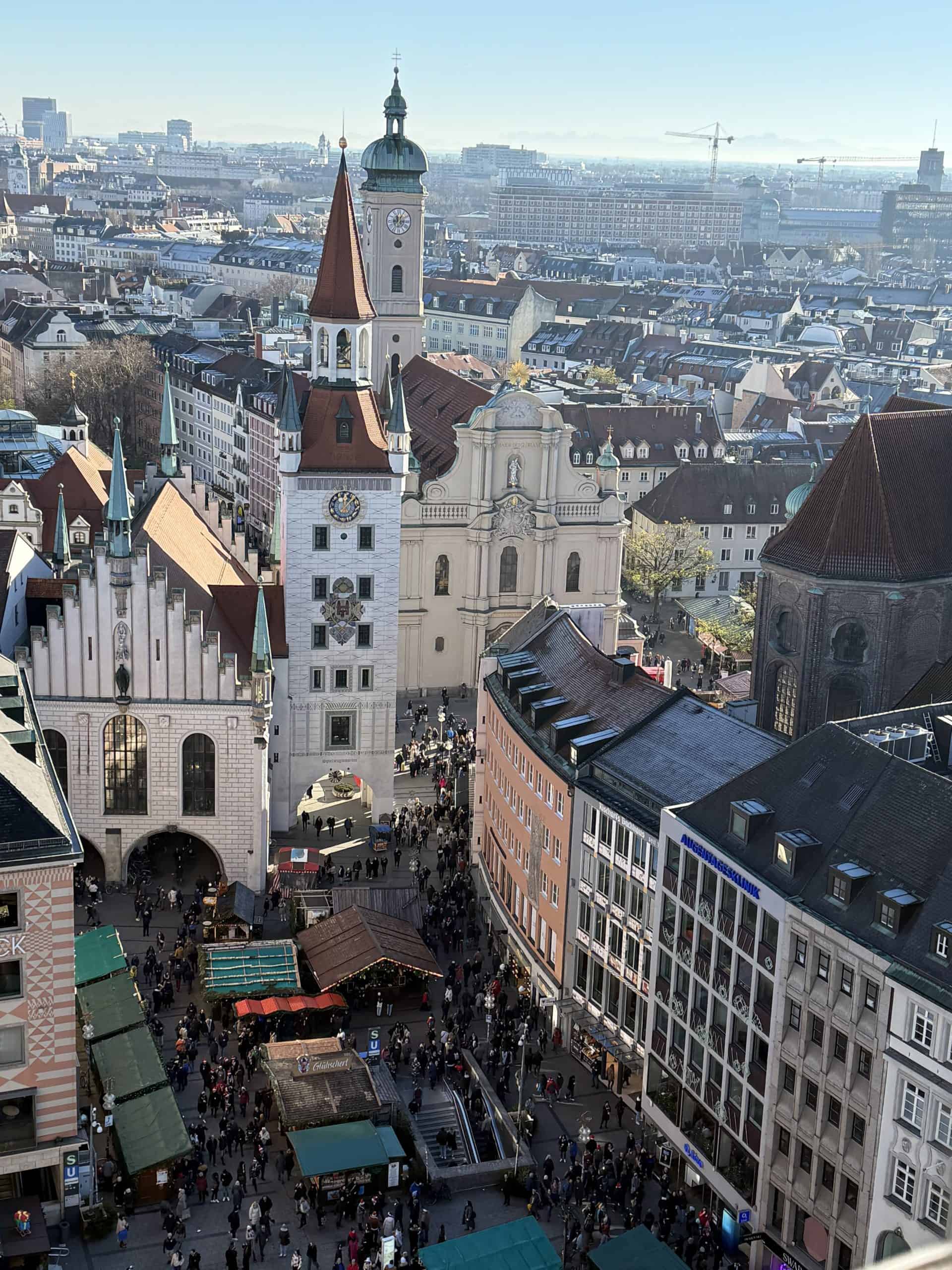
With a second day, you can visit larger attractions like Nymphenburg Palace, the English Garden, or one of Munich’s museums.
For first-time visitors, two days offers a great balance. You can see Munich’s historic landmarks and experience the city’s culture at a relaxed pace.
Two Day Munich Itinerary
This itinerary builds on my One Day Munich route and adds more neighborhoods, parks, and museums. It can easily be tailored depending on your interests and travel style.
When I only have a short time in a city, I like to start with a walking tour. In a couple of hours, you can learn the city’s history and culture while getting oriented. This Munich Old Town Walking Tour highlights the main landmarks while explaining city history before you continue exploring on your own.
If tours are not your thing or you prefer to keep a flexible schedule, you can explore everything independently and still get a great feel for the city.
Here is how I recommend structuring 2 days in Munich.
Day 1 in Munich: Explore the Historic Old Town
Your first day in Munich focuses on the heart of the city. Many of Munich’s most famous landmarks are located within the Altstadt (Old Town), making it easy to explore on foot.
If you prefer a deeper overview of these landmarks, I cover the places in more detail in my Munich Old Town Guide.
Here is my recommended route for Day 1.
Morning in Munich: Breakfast at Viktualienmarkt
Start your day at Viktualienmarkt, Munich’s famous open air food market located just a few minutes from Marienplatz. This lively market has been part of Munich’s daily life since the 1800s and remains a great place to experience local culture.

Grab coffee and breakfast from one of the stalls or settle into a nearby café before beginning your walk through the Old Town. If you want to try a traditional Bavarian breakfast, look for Weißwurst served with pretzels and sweet mustard.
Even if you visit briefly, return later when the shaded beer garden fills with locals enjoying lunch or drinks.
Mid Morning: Munich’s Old Town Landmarks
From Viktualienmarkt, it is only a short walk to several of Munich’s most recognizable landmarks.
Begin with the Frauenkirche, the cathedral with the twin onion domes that dominate Munich’s skyline. From there, continue to Marienplatz, the central square and one of the main gathering places in the city.
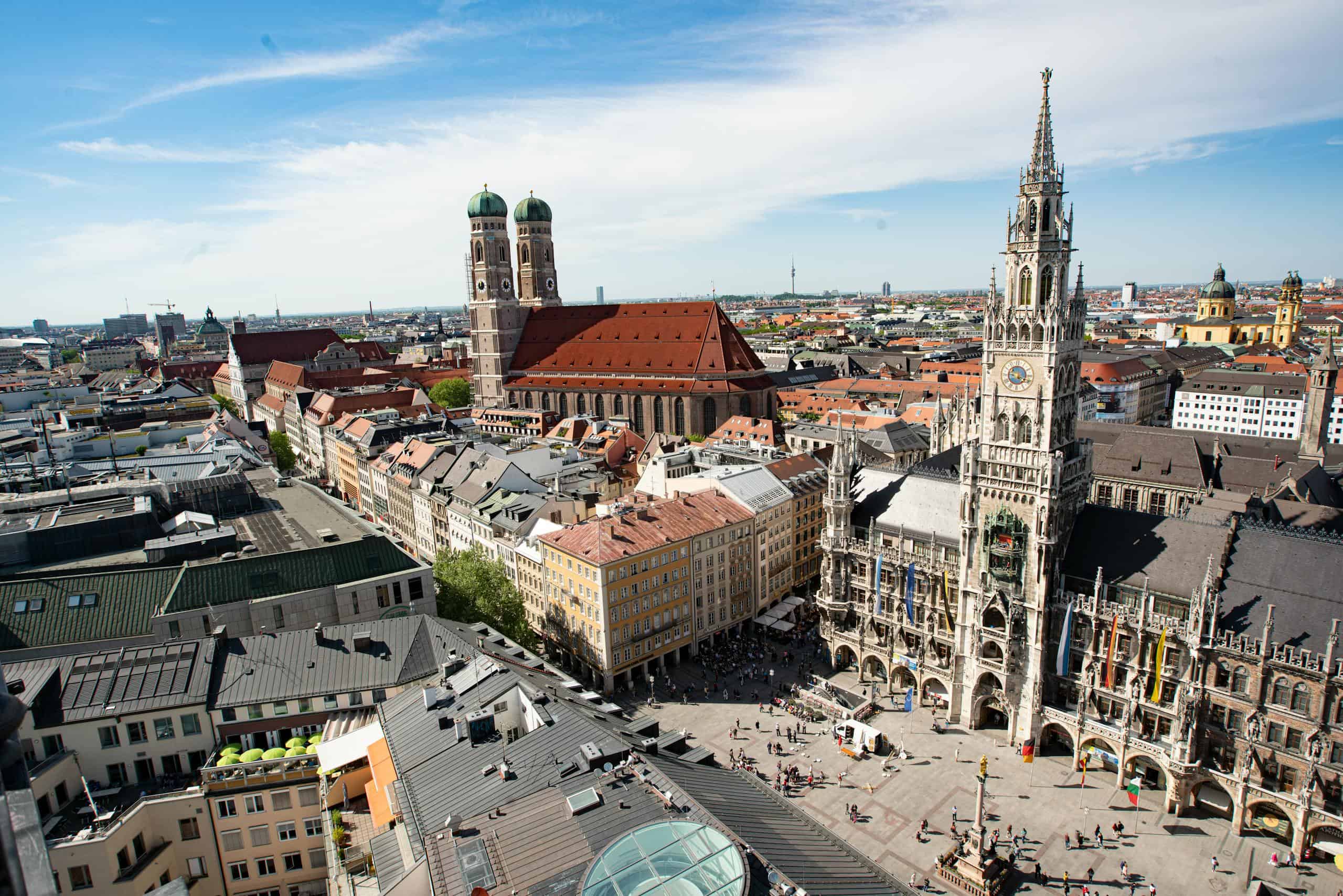
The square is framed by both the Old Town Hall and the impressive New Town Hall, home to the famous Glockenspiel. Visit around 11 a.m. or noon to watch the mechanical figures perform their traditional dance above the square.
The New Town Hall has an observation tower with an elevator. I have visited many observation towers in Europe, but few have elevators like this one. It is not as high as some, but it is still worth doing.
Just a few steps away you will find St. Peter’s Church, Munich’s oldest parish church. Visitors willing to climb the tower are rewarded with some of the best views of the Old Town rooftops.
Lunch in Munich: Hofbräuhaus
By midday, it is time to experience one of Munich’s most famous traditions, a visit to a Bavarian beer hall.
The Hofbräuhaus München is one of the most well known beer halls in the world and a fun place to stop for lunch. Founded in the 1500s to brew beer for Bavarian royalty, it later opened publicly and became a famous Munich gathering spot.
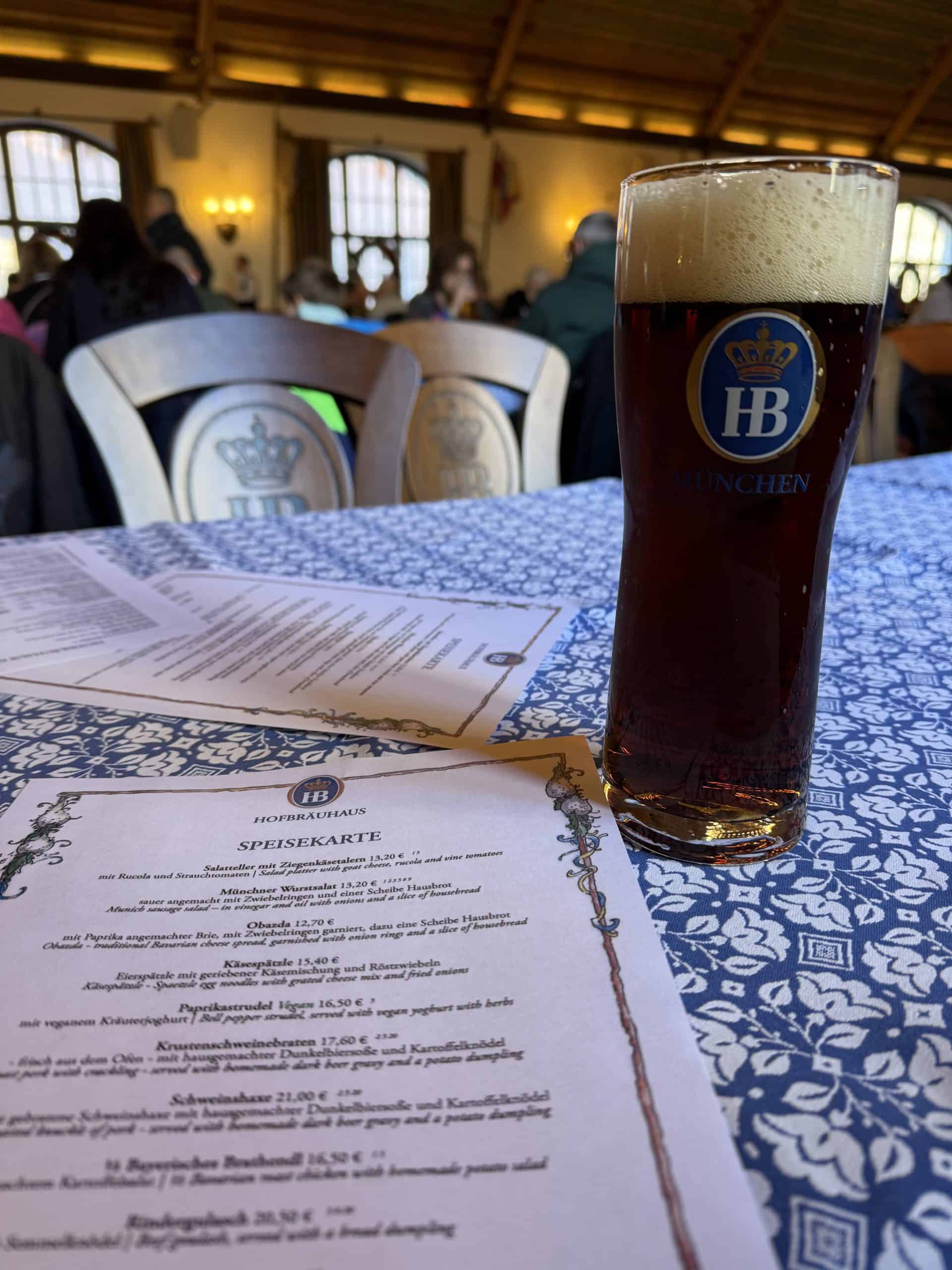
Inside you will find communal tables, Bavarian music, and a menu filled with local favorites. It can be lively and a little touristy, but it is still a memorable Munich experience.
If you would rather explore Munich’s food and beer culture with a guide, this Beer and Bites Tour is a great option.
Another lunch option is Café Glockenspiel overlooking Marienplatz. It is quieter and offers a great view of the square.
Early Afternoon: Munich’s Historic Squares and City Gate
After lunch, take a short walk to Isartor, one of the remaining medieval gates from Munich’s original city walls. Built in the 14th century, the gate once served as a main entrance and still reflects Munich’s medieval history.
From Isartor, return toward the center of the Old Town and continue north to explore several of Munich’s most elegant squares.
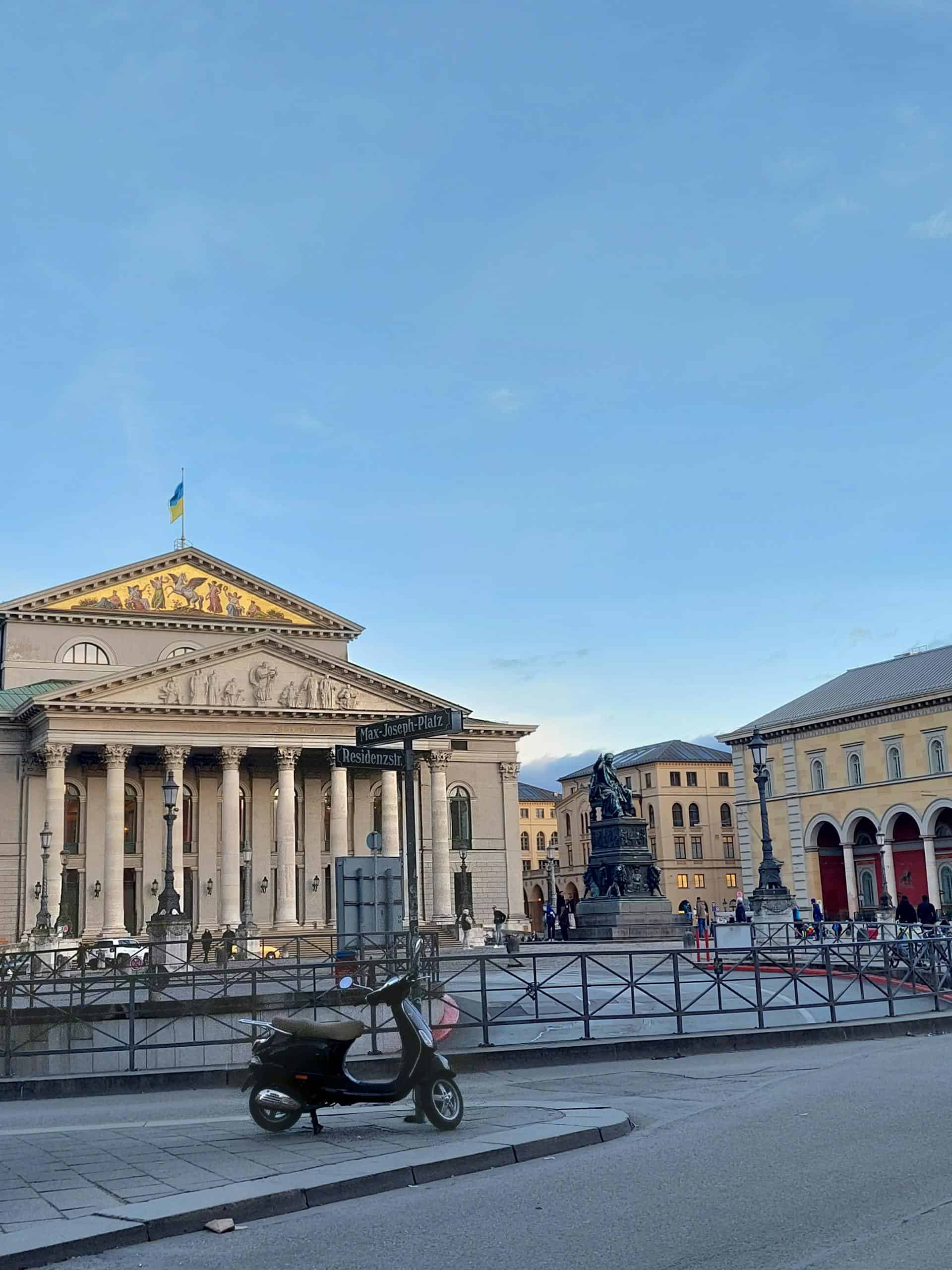
Start at Max Joseph Platz, home to the Bavarian State Opera and surrounded by grand historic buildings. From there, walk toward Odeonsplatz, one of Munich’s most beautiful squares and the beginning of the wide Ludwigstrasse boulevard.
This area reflects Munich’s royal history and features architecture inspired by Italian cities such as Florence and Rome.
Mid Afternoon: Explore the Munich Residenz
Just beside Odeonsplatz sits the Munich Residenz, the former royal palace of the Bavarian rulers and one of the largest palace complexes in Germany.
For centuries this palace housed the Wittelsbach dynasty. Today visitors explore royal apartments, ceremonial halls, and galleries. Highlights include the stunning Antiquarium Hall and the richly decorated state rooms that once hosted royal events and celebrations.
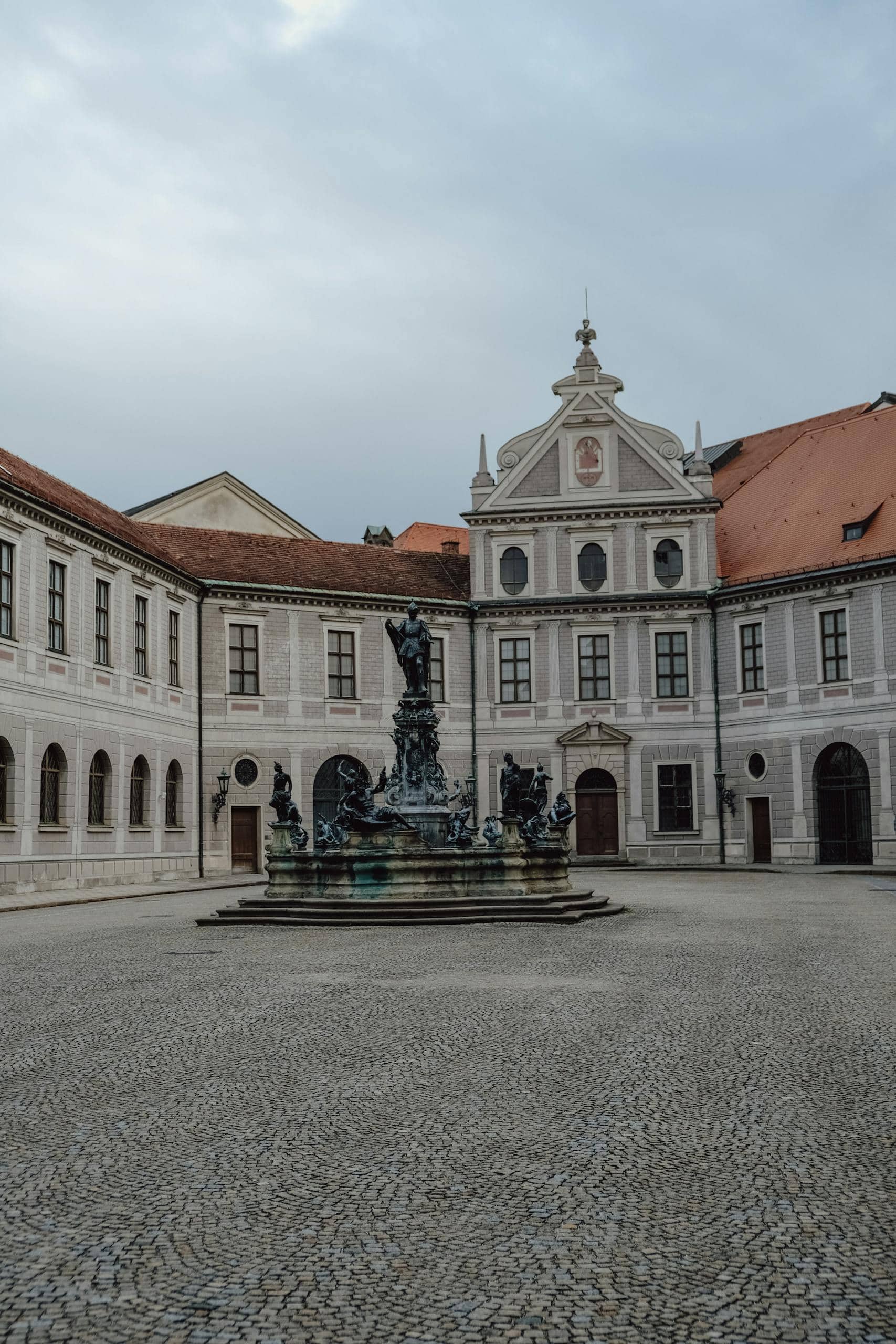
If you enjoy history or European palaces, the Residenz is one of Munich’s most impressive sites.
💡Fun Fact: The Munich Residenz is one of the largest royal palaces located within a city center in Europe
Late Afternoon and Dinner in Munich
As you make your way back toward Marienplatz for dinner, stop at Asamkirche, a small Baroque church tucked along Sendlinger Straße. Despite its modest exterior, the interior is ornate with gold detailing, frescoes, and elaborate carvings.
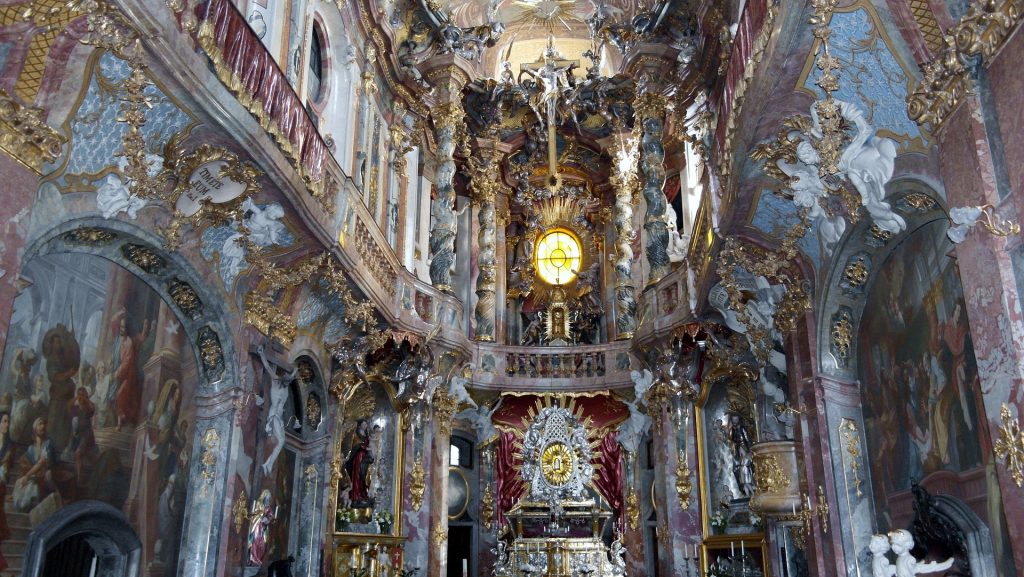
It is one of Munich’s most beautiful hidden gems and a quick stop that many visitors miss.
From there, continue toward the Frauenkirche, where you will find several traditional Bavarian restaurants serving local specialties
Some great options nearby include:
Nürnberger Bratwurst Glöckl – A historic restaurant known for its traditional sausages and classic Bavarian comfort food.
Augustiner am Dom – A popular Bavarian beer hall serving hearty dishes and beer from Munich’s oldest brewery.
Andechser am Dom – A welcoming restaurant known for traditional Bavarian specialties and strong monastic beers from Andechs Abbey.
🍽️ I recommend making a reservation when possible.
Evening in Munich
After dinner, take a relaxed walk through Marienplatz and the surrounding Old Town streets. The historic buildings are beautifully illuminated in the evening, creating a completely different atmosphere than during the day.
If you are visiting during Advent, this is also the perfect time to explore the Munich Christmas markets, which fill many of the Old Town squares with festive lights, food stalls, and seasonal music.
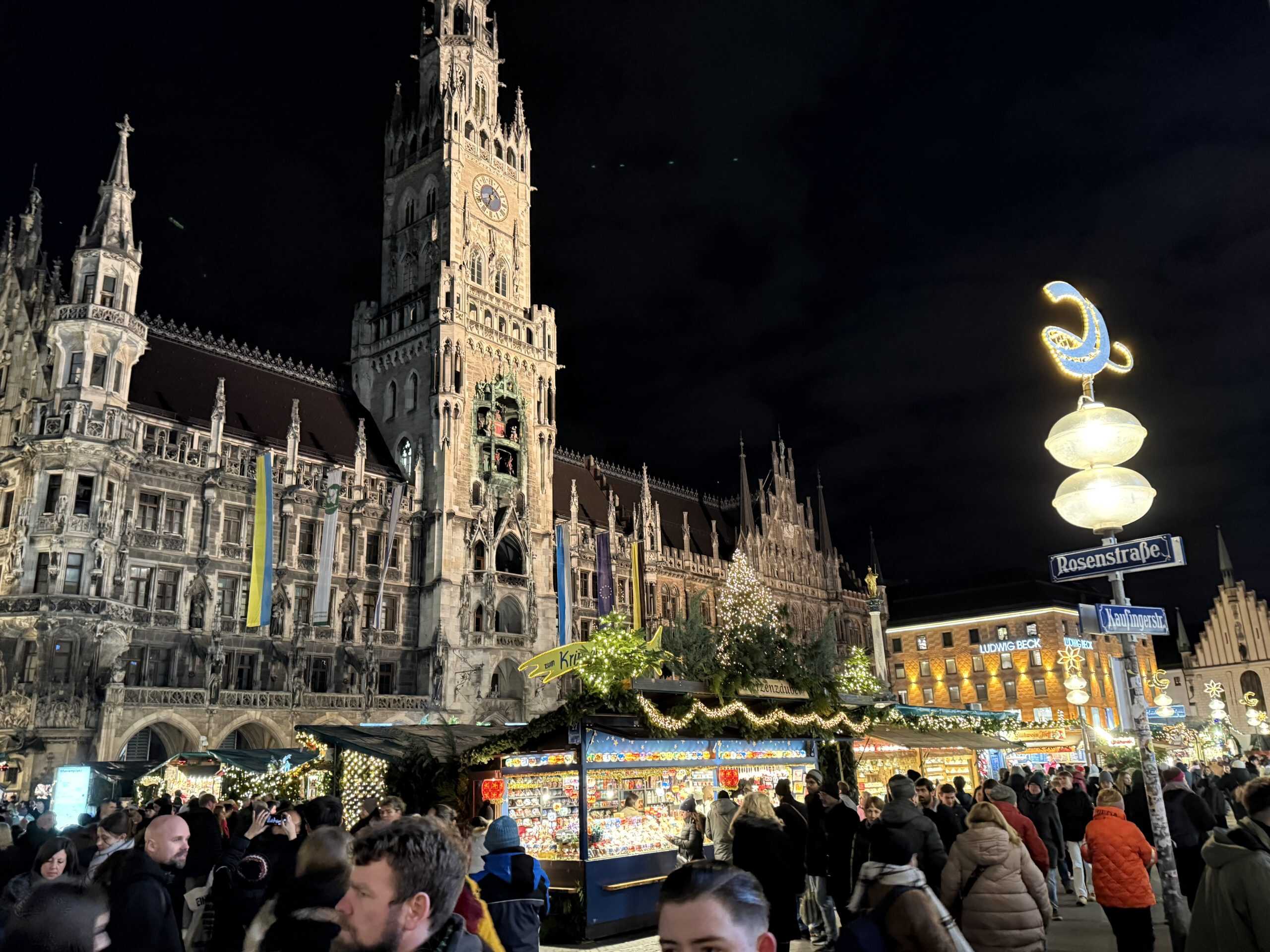
If you still have energy and would like a drink to wrap up the day, Munich has plenty of options nearby.
Hackerhaus / Hacker-Pschorr am Marienplatz – Just steps from Marienplatz, this traditional beer hall serves classic Bavarian beer from the Hacker-Pschorr brewery.
Pusser’s Bar – A cozy cocktail bar in a historic setting known for its rum drinks and relaxed atmosphere.
Schumann’s Bar – One of Munich’s most famous cocktail bars, known for expertly crafted drinks.
💡Travel Tip: If you plan to use public transportation or visit several attractions, the Munich City Card can be a convenient option. It includes unlimited travel on the U-Bahn, S-Bahn, trams, and buses plus discounts at many museums and sights.
👉 Check current Munich City Card options here.
Day 2 in Munich: Palaces, Parks, and Museums
After exploring the historic center on your first day, the second day in Munich is a great opportunity to see more of the city beyond the Old Town.
Munich offers a mix of royal palaces, large parks, and world class museums, so you can tailor this day based on your interests. Whether you prefer history, art, or relaxing outdoors, there are plenty of options to fill your second day.
Morning: Visit Nymphenburg Palace
Start your day with a visit to Nymphenburg Palace, the former summer residence of the Bavarian kings.
Located 25 minutes from the city center by transit, this impressive Baroque palace is one of Munich’s top landmarks. The palace complex includes lavish state rooms and extensive gardens behind the main building.
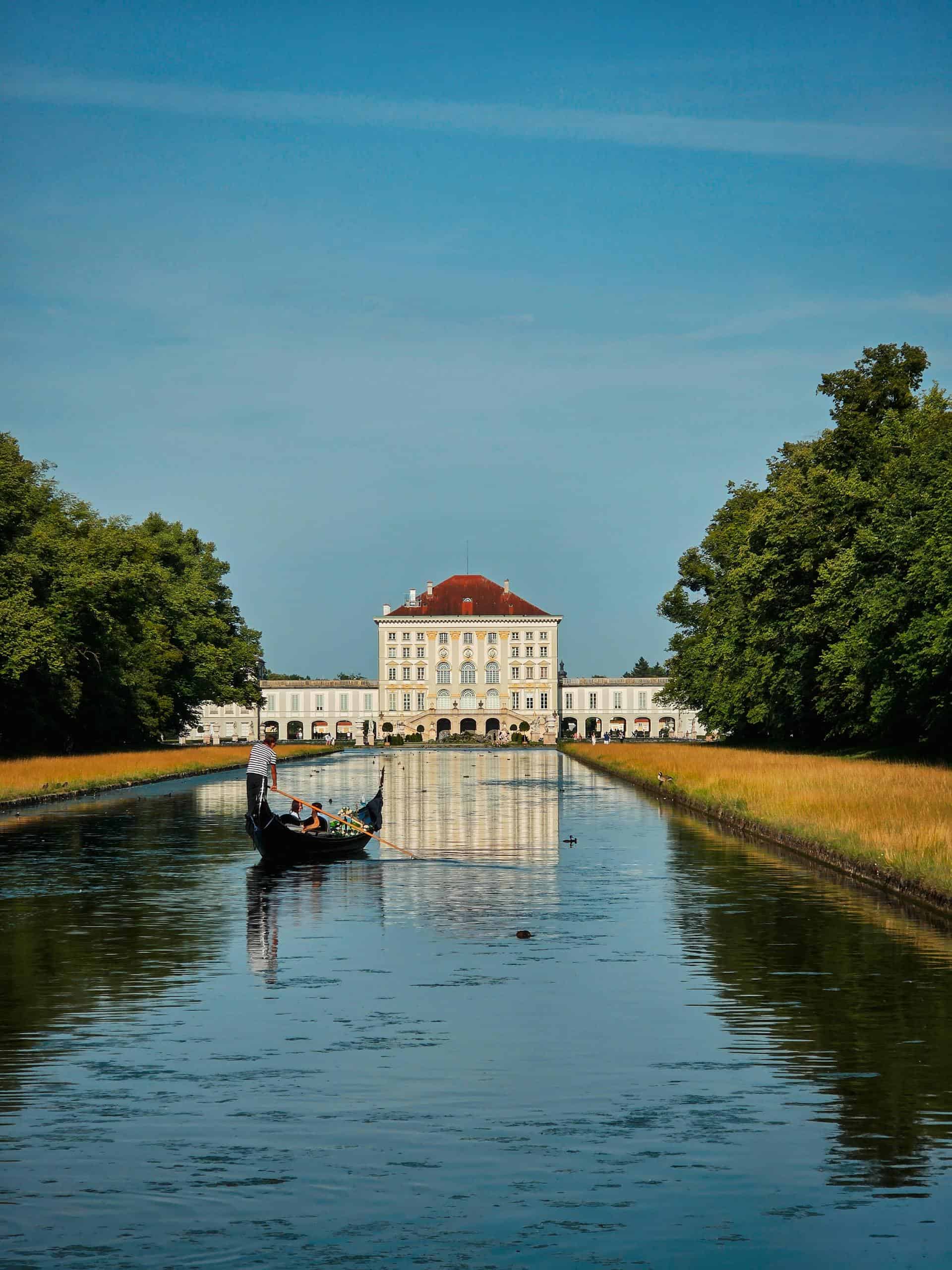
Inside, highlights include the Great Hall with its ceiling fresco and several elegant royal apartments. If the weather is nice, spend some time walking through the palace gardens, which feature canals, pavilions, and peaceful paths.
Midday: Olympic Park
After visiting Nymphenburg Palace, continue toward Olympic Park, the site of the 1972 Summer Olympics.
Today the park serves as one of Munich’s main recreational spaces with wide open views of the city. Visitors can walk around the lake, climb the grassy hills for panoramic viewpoints, or visit the Olympic Tower observation deck for a higher perspective over Munich.
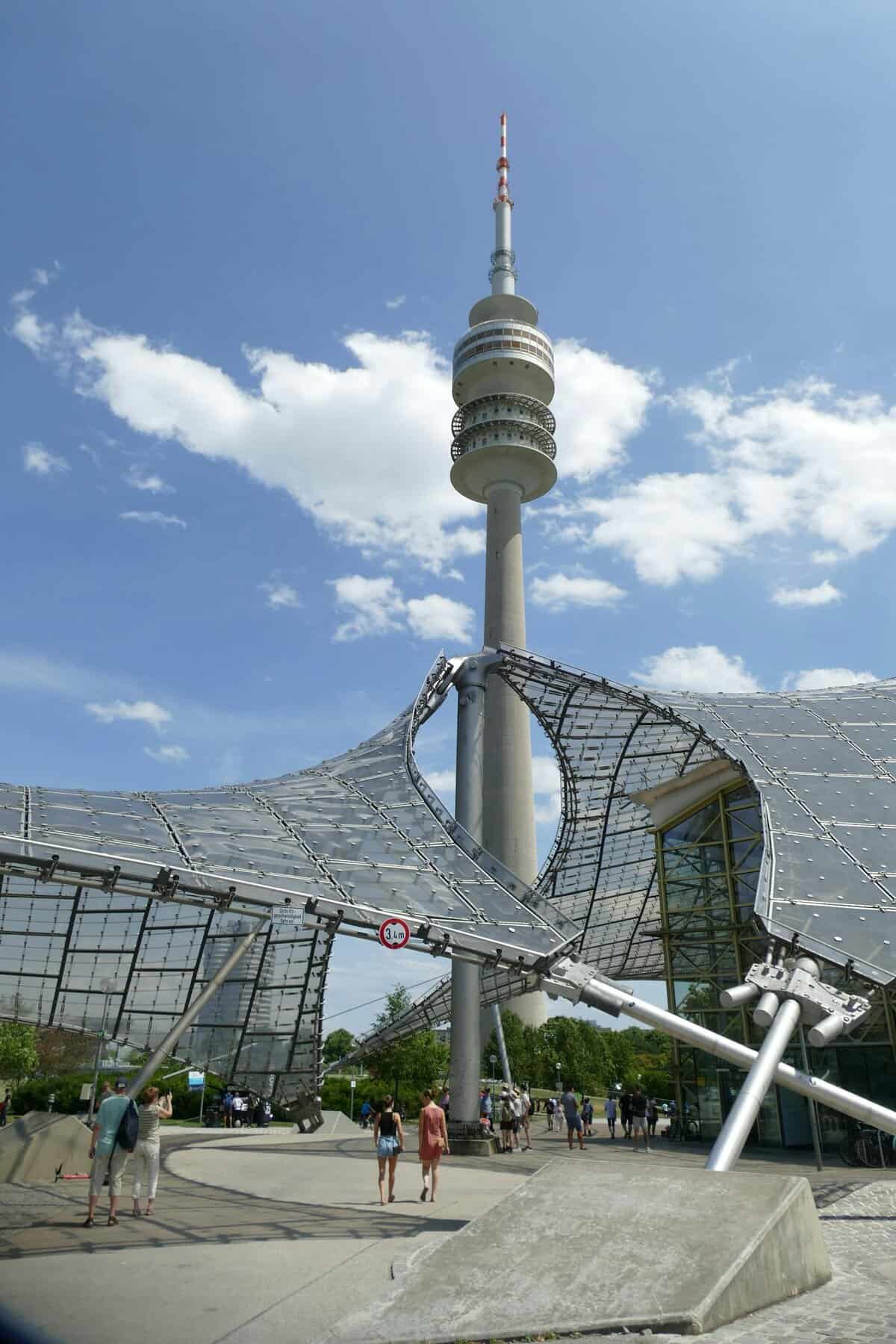
The park is also located next to several other attractions, making it easy to continue exploring the area.
Afternoon Option: BMW Museum or Munich Museums
From Olympic Park you have a couple of good options depending on your interests.
Car enthusiasts may want to visit the BMW Museum and BMW World, located just across the street from the park. These exhibits showcase the history of the BMW brand along with modern concept cars and interactive displays.
If you prefer art or science museums, Munich has several excellent choices. The Alte Pinakothek houses an impressive collection of European masterpieces, while the Deutsches Museum is one of the world’s largest science and technology museums.
Late Afternoon: Hofgarten and the English Garden
After visiting museums or exploring other parts of the city, spend some time outdoors at two of Munich’s most beautiful parks.
Just beyond Odeonsplatz lies Hofgarten, a Renaissance style garden originally built for the Bavarian royal court.
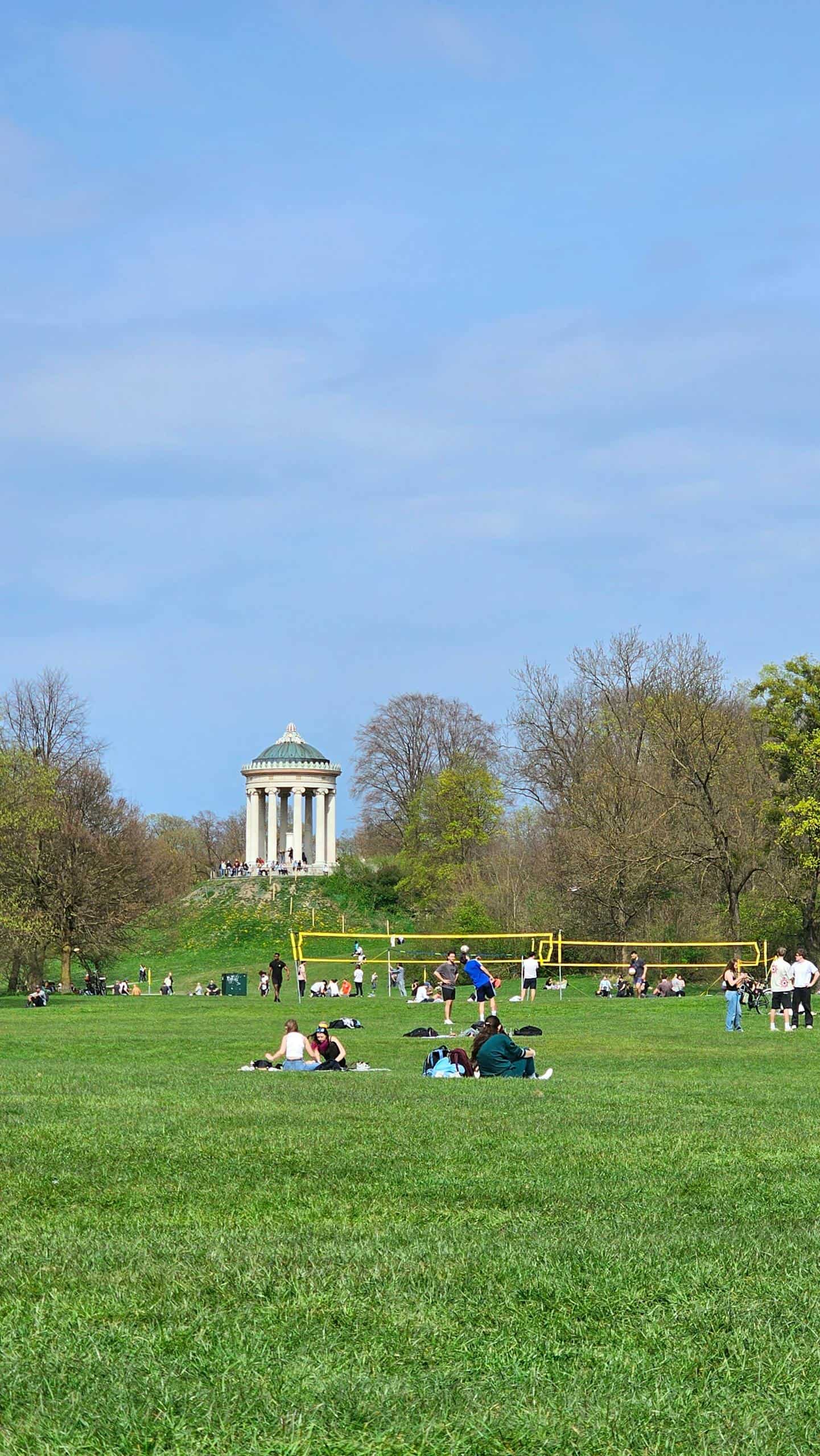
From Hofgarten it is easy to continue into the English Garden, one of the largest urban parks in Europe. This massive park stretches for miles and is a favorite gathering place for locals.
You will see people jogging, cycling, relaxing in the grass, and gathering at the park’s famous beer gardens. One of the most unusual sights here is the Eisbach wave, where surfers ride a standing river wave year round.
💡Good To Know: As of March 2026, the famous Eisbach wave is temporarily closed while the city works on a plan to restore it.
Optional Stop: Schwabing
If you enjoy exploring neighborhoods beyond the main tourist areas, consider heading to Schwabing before dinner.
Located just north of the English Garden, Schwabing is known for its cafés, independent shops, and long artistic history. In the late nineteenth and early twentieth centuries, writers and artists made the neighborhood a cultural hub of Munich.
Today Schwabing has a relaxed, local atmosphere that feels different from the busy Old Town. It is a nice place to wander, grab coffee, or enjoy dinner if you want to experience a quieter side of the city.
Evening: Dinner and a Relaxed Night in Munich
For your final evening, you can either stay in Schwabing for dinner or return to the Old Town for another traditional Bavarian meal.
Munich’s restaurants range from historic beer halls to modern German cuisine, and the area around Marienplatz stays lively in the evening. If you are visiting during Advent, this is also a great time to explore more of Munich’s Christmas markets.
Optional Day 3 in Munich: Add a Day Trip
If you have a third day available, Munich is one of the best cities in Germany to use as a base for day trips. Bavaria is filled with historic towns, castles, and important historical sites, many of which can be reached in under two hours.
During my visit, we had three full days in Munich and used two of those days for day trips or half day trips to Salzburg, Austria and the Dachau Concentration Camp Memorial Site.
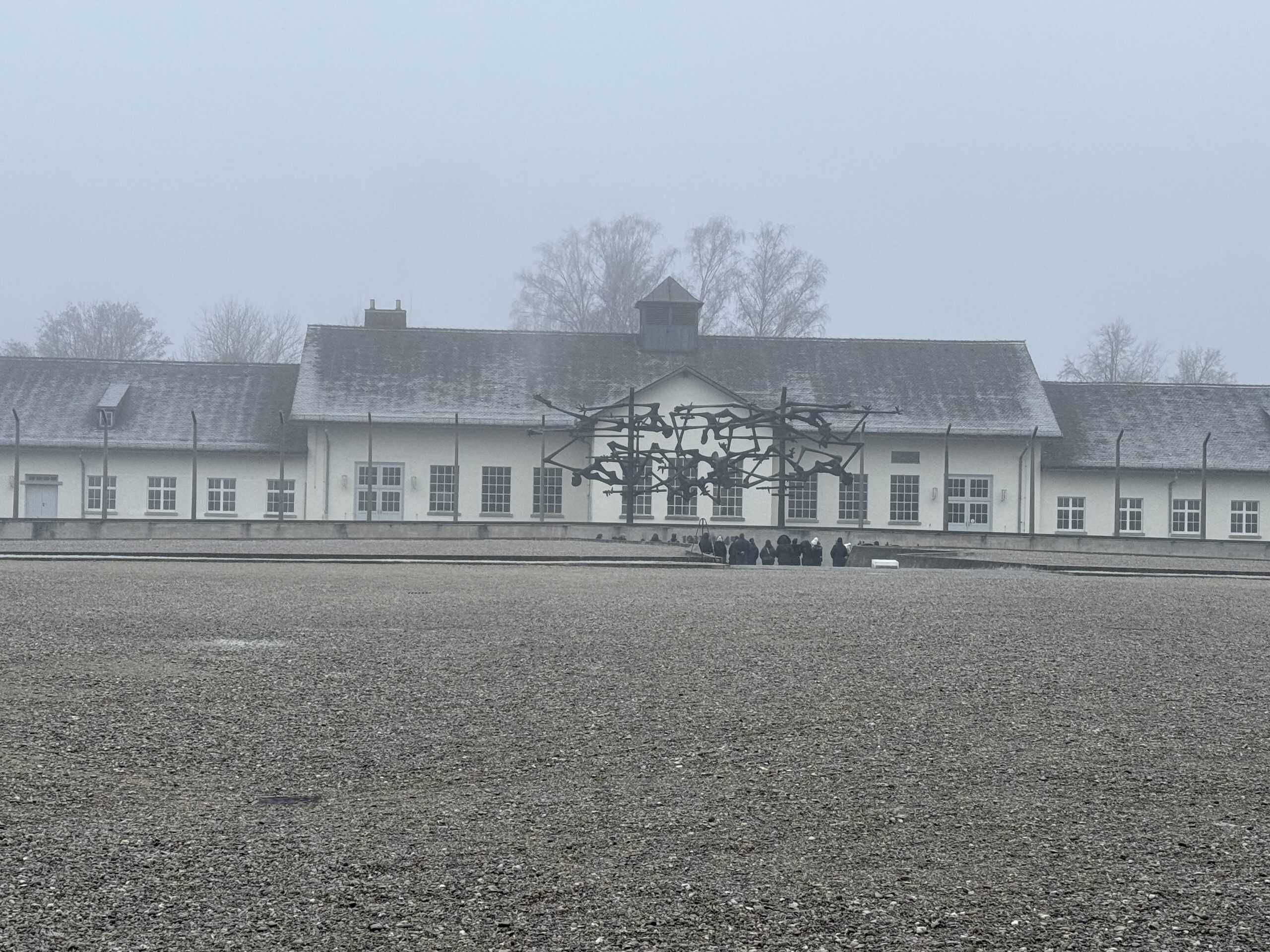
Some of the most popular day trips from Munich include:
Salzburg, Austria – Just over an hour by train, this charming Austrian city is known for its baroque architecture, hilltop fortress, and connection to The Sound of Music.
Dachau Concentration Camp Memorial Site – Located less than 30 minutes from Munich, this important historical site preserves the grounds of the first Nazi concentration camp.
Neuschwanstein Castle – One of Bavaria’s most famous castles, built by King Ludwig II and often described as the inspiration for Disney’s fairy tale castle.
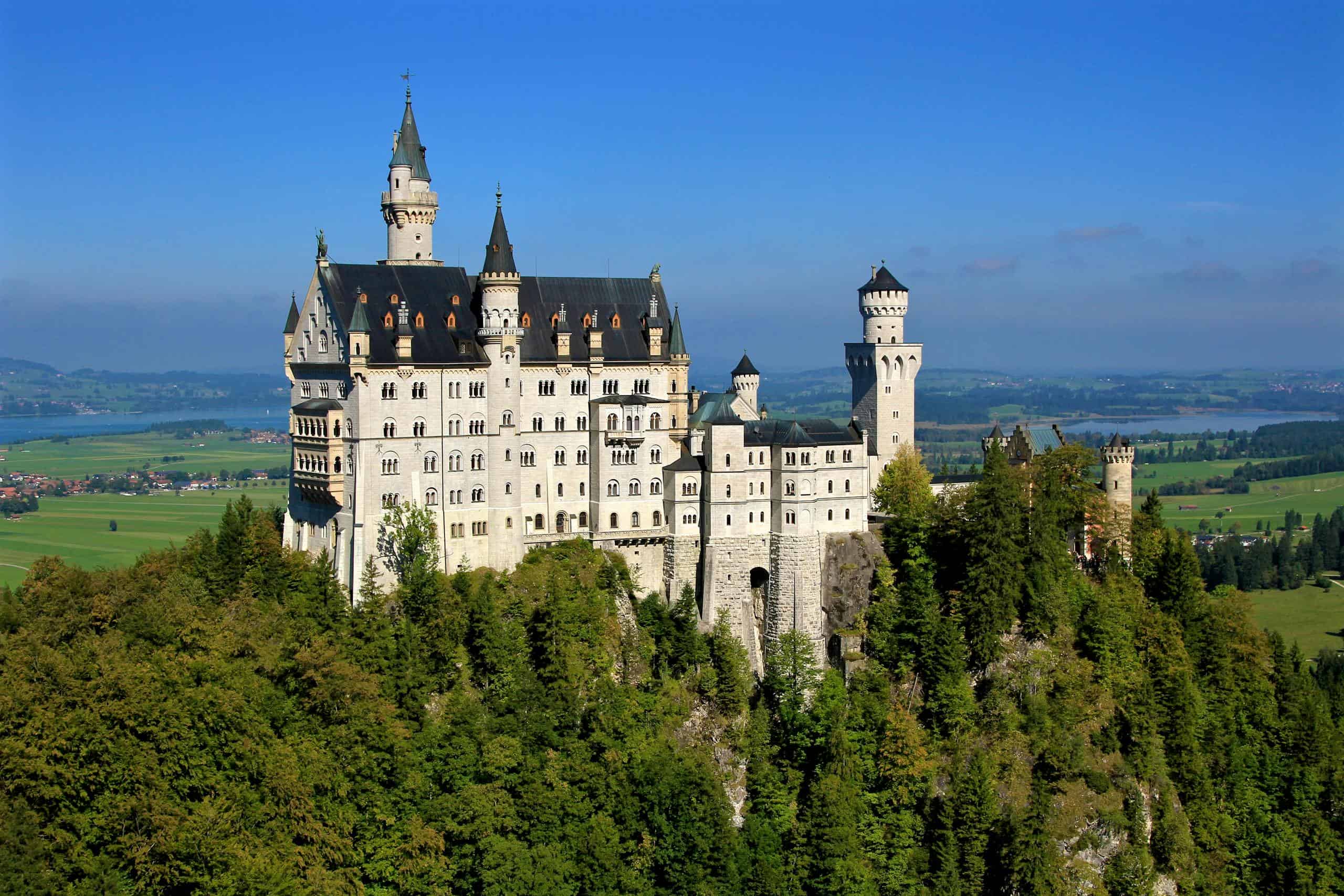
👉 For more ideas, transportation tips, and tour options, see my full guide to Best Day Trips from Munich.
Seasonal Events in Munich
Munich is a great destination year round, but certain times of year bring especially unique experiences.
Christmas Markets (Late November to December)
During Advent, Munich’s historic squares fill with festive Christmas markets. The centerpiece is the Christkindlmarkt at Marienplatz, set beneath the dramatic New Town Hall. When I visited in late November, we found ourselves returning to the markets most evenings to soak in the atmosphere and grab a bite to eat.
Oktoberfest (Late September to Early October)
Munich is world famous for Oktoberfest, the largest beer festival in the world. Held each fall at Theresienwiese, it features huge beer tents, Bavarian food, and live music.
Tollwood Festival (Summer and Winter)
The Tollwood Festival takes place twice a year and blends food stalls, artisan markets, live performances, and cultural events. The winter edition overlaps with the Christmas market season, while the summer festival brings an international food market and outdoor concerts.
If you are visiting during the holiday season, see my full guide to the Munich Christmas Markets for tips on the best markets, foods to try, and how to avoid the crowds.
Munich Travel Tips for Planning Your Visit
Before your trip, these practical tips can make Munich easier to explore and help you use your time well.
1. When to Visit Munich
Munich is a great year round destination, but the best time to visit depends on your preferred weather and experiences.
Spring (April–June) – Mild weather, blooming parks, and outdoor cafés reopening.
Summer (July–September) – Warm temperatures, long daylight hours, and lively beer gardens.
Fall (Late September–October) – Cooler temperatures and Oktoberfest, Munich’s famous beer festival.
Winter (Late November–December) – Cold weather with occasional snow and festive Christmas markets in the Old Town.
2. Consider a Bayern Ticket for Day Trips
If you plan to take a day trip, the Bayern Ticket can be a great option. It allows unlimited regional train travel for a day.
You can find additional ideas and transportation tips in my guide to the Best Day Trips from Munich.
3. Allow Extra Time During Seasonal Events
If seasonal events are important to your visit, plan sightseeing around them or add time to your trip to enjoy both. Events like Christmas markets, Oktoberfest, or the Tollwood Festival can easily become a highlight of your trip.
When we visited during Christmas market season, the markets were a big focus for us. We balanced sightseeing with exploring the festive stalls and atmosphere.
4. Plan Ahead for Sundays
Many shops in Munich are closed on Sundays, including most grocery stores and retail shops. However, many museums, churches, and attractions remain open. Restaurants, cafés, and beer halls usually stay open too.
5. Carry Some Cash
While many restaurants and attractions in Munich accept credit cards, smaller cafés, market stalls, and traditional beer halls sometimes prefer cash. It is a good idea to carry some euros.
ATMs are easy to find throughout the city if you need to withdraw cash during your trip.
Where to Stay in Munich
For most visitors, the most convenient areas to stay are Old Town (Altstadt) or near Munich Central Station (Hauptbahnhof).
Old Town (Altstadt) – Best for first-time visitors who want to walk to major sights like Marienplatz, Viktualienmarkt, and the Frauenkirche. Platzl Hotel is a great option just steps from Marienplatz with traditional Bavarian charm.
Near Munich Central Station (Hauptbahnhof) – A convenient base for public transportation and day trips like Salzburg or Neuschwanstein. During my visit, I stayed at KING’s Hotel Center. It offers comfortable rooms within walking distance to Old Town.
For more hotel options and neighborhood tips, see my guide to Where to Stay in Munich.
Getting to and Around Munich
Munich is one of Germany’s easiest cities to reach and navigate. Its transportation system is efficient and well connected.
Getting from Munich Airport to the City Center
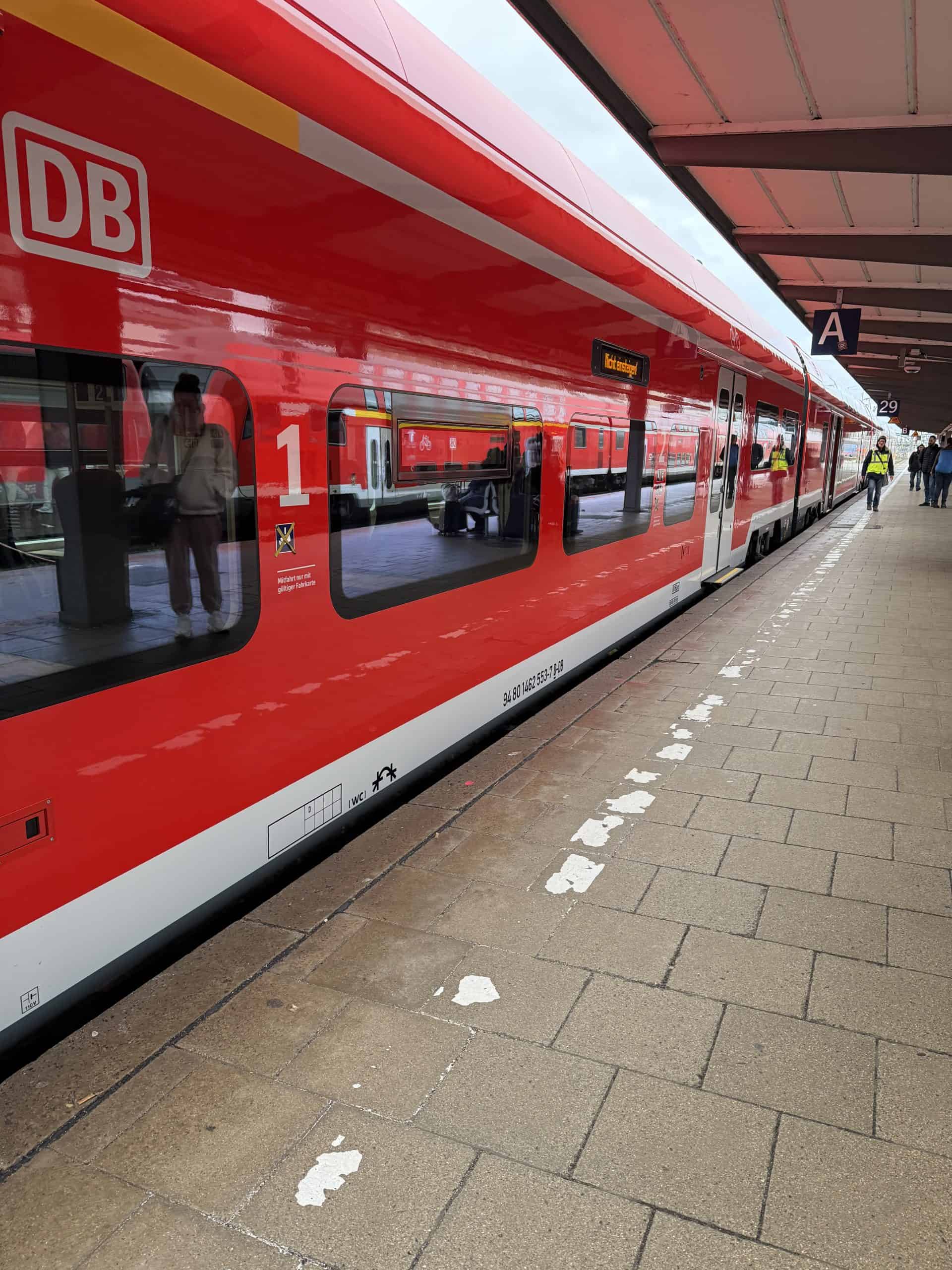
Munich Airport is located about 40 minutes from the city center. The easiest way to reach downtown Munich is by taking the S Bahn commuter train.
Both the S1 and S8 run directly from the airport to central Munich, including Hauptbahnhof and Marienplatz. Trains run every 10 to 20 minutes.
We chose this route and it was easy to figure out and navigate.
Getting Around Munich
Munich’s public transportation system is reliable and easy to use. Most visitors rely on a combination of walking and public transit to reach attractions around the city.
Transportation options include:
U Bahn (subway)
Fast underground trains that connect major areas throughout the city.
S Bahn (commuter rail)
Trains that run through the city center and connect to suburbs and the airport.
Trams and buses
Useful for shorter trips within neighborhoods and areas not served by the subway.
If you plan to visit several attractions, the Munich City Card can be a convenient option. It includes unlimited public transportation along with discounts at many museums and attractions.
FAQs
Here are answers to some of the questions I get asked most about Munich.
Is Munich worth visiting?
Yes, Munich is absolutely worth visiting. The city blends Bavarian traditions, historic architecture, beer halls, and beautiful parks. I am already planning a second trip.
What food should you try in Munich?
Munich is known for classic Bavarian dishes that pair perfectly with local beer. Some traditional foods to try include Weißwurst (white sausage with sweet mustard and pretzels), bratwurst, pork knuckle, and Käsespätzle, a rich noodle dish with melted cheese.
Viktualienmarkt and Munich’s historic beer halls are great places to sample these local specialties.
What are the most famous beer halls in Munich?
Munich is home to several historic beer halls, but the most famous is the Hofbräuhaus, which dates back to the sixteenth century.
Other well known beer halls include Augustiner Bräustuben, Hackerhaus, and Andechser am Dom, where visitors can enjoy traditional Bavarian food alongside locally brewed beer.
Is English widely spoken in Munich?
Yes. English is widely spoken throughout Munich, especially in the Old Town, restaurants, hotels, and major tourist attractions.
While it is always appreciated if visitors learn a few basic German phrases, most travelers will have no difficulty communicating during their visit.
Can you see the Alps from Munich?
Yes, on clear days the Alps are visible from parts of Munich, particularly from higher viewpoints like church towers or observation decks.
Is Munich a good destination for families?
Yes, Munich is a very family friendly city. The compact Old Town makes it easy to explore many of the main sights on foot, and the city’s parks provide plenty of space for kids to run and play.
During the holiday season, Munich’s Christmas markets are also popular with families thanks to festive decorations, seasonal treats, and activities designed for children.
Are ride shares and taxis easy to use in Munich?
Yes. Taxis are widely available throughout Munich and can be found at taxi stands, hotels, train stations, or booked through apps. Ride share services such as Uber also operate in the city and can be a convenient option for short trips.
Final Thoughts
Munich is one of those cities that is easy to enjoy even on a short visit. With two days in Munich, you can experience the highlights of the Old Town, visit a royal palace, relax in the city’s parks, and still have time to enjoy a traditional Bavarian meal or beer hall.
If your schedule allows, adding a third day opens up even more possibilities. Munich is an excellent base for exploring Bavaria, including Salzburg, Neuschwanstein Castle, and the Dachau Memorial Site.
During my visit, we spent three days in Munich, used the city as a base for day trips, and still did not see everything. I would love to return for more museums and neighborhoods.
Whether you are visiting for the historic architecture, the famous beer culture, the Christmas markets, or the nearby alpine scenery, Munich offers a memorable introduction to Bavaria and southern Germany.
If you are planning your trip, you may also find these guides helpful:
- One Day in Munich Itinerary
- Best Day Trips from Munich
- Munich Christmas Markets Guide
- Where to Stay in Munich
Each one expands on different ways to experience the city and the surrounding region.
I hope you found this Two Days in Munich itinerary helpful for planning your trip. Drop me an email if you have any questions. TravelandTinsel@gmail.com I love to hear from readers.
