
Travel and Tinsel contains affiliate links and is a member of the Amazon LLC Associates Program. If you make a purchase using one of these Amazon links, we may receive compensation at no extra cost to you. Read my disclaimer for more information.
Munich’s Old Town feels like stepping into history. The cobblestone streets, church towers, and charming squares create a city that feels historic and full of character.
On my visit, I used Munich as a base to explore Bavaria during the holidays, but the Old Town itself became a highlight. Within a few walkable blocks, you can explore centuries-old churches, shop at Viktualienmarkt’s, experience Munich’s beer culture, take in panoramic rooftop views, and in December sip mulled wine (or kinderpunsch) while shopping at the Christmas Market.
Thanks to its central location and easy access to public transport, Altstadt makes the perfect starting point for first-timers to experience Munich. It’s compact enough to explore on foot, and filled with history, architecture, food, and culture.
Whether you’re here for a day or a week, Old Town is Munich’s beating heart.
🏛️ A Walk Through Munich’s History, Culture, and Character
Munich Old Town, or Altstadt, has been the center of life in Munich for centuries. This is where emperors were crowned, churches were built, and the city’s most iconic squares took shape. Despite heavy bombing in World War II, much of the area has been restored.
The architecture tells the story with Baroque façades, Gothic spires, Renaissance arcades (covered walkways), and quiet courtyards. At the center of it all is Marienplatz, a square and gathering place for everything from futbol celebrations to holiday markets. Nearby, beer halls like the Hofbräuhaus keep Bavarian traditions alive with local dishes, music, and a rich brewing heritage.
Munich Old Town has a rhythm of its own. It’s rich in history, full of character, and even more enchanting when the holidays arrive.
🏰 Top Things to Do in Munich Old Town
Munich Old Town is packed with beautiful churches, iconic landmarks, historic squares, and cultural sites. You can easily fill a day wandering from one site to the next without ever leaving the heart of the city. These are the must-see sights to explore:
Marienplatz & the Glockenspiel
This central square is the heart of Old Town. The New Town Hall (Neues Rathaus) towers over the plaza, and twice a day, its famous Glockenspiel delights visitors with a musical reenactment of a 16th-century wedding and traditional dances. The show runs daily at 11 a.m. and 12 p.m., with an extra performance at 5 p.m. in summer.
It’s a popular spot, so arrive a few minutes early to get a clear view.
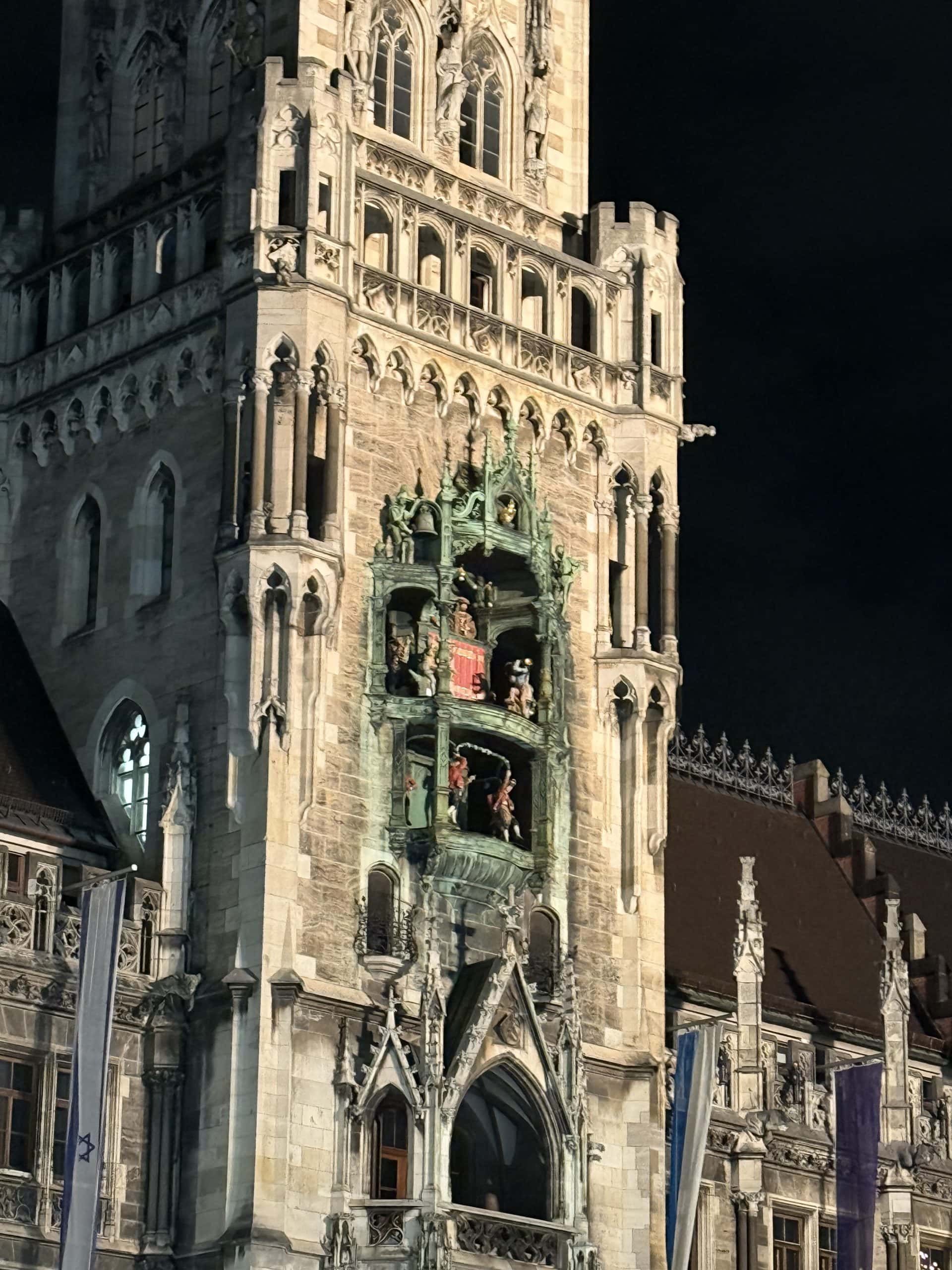
🎄Seasonal Highlight: From late November through Christmas Eve, Marienplatz transforms into Munich’s main Christkindlmarkt, complete with hundreds of chalets, festive music, and a massive Christmas tree. We loved the setting for this Christmas market.
Neues Rathaus Tower View in Marienplatz
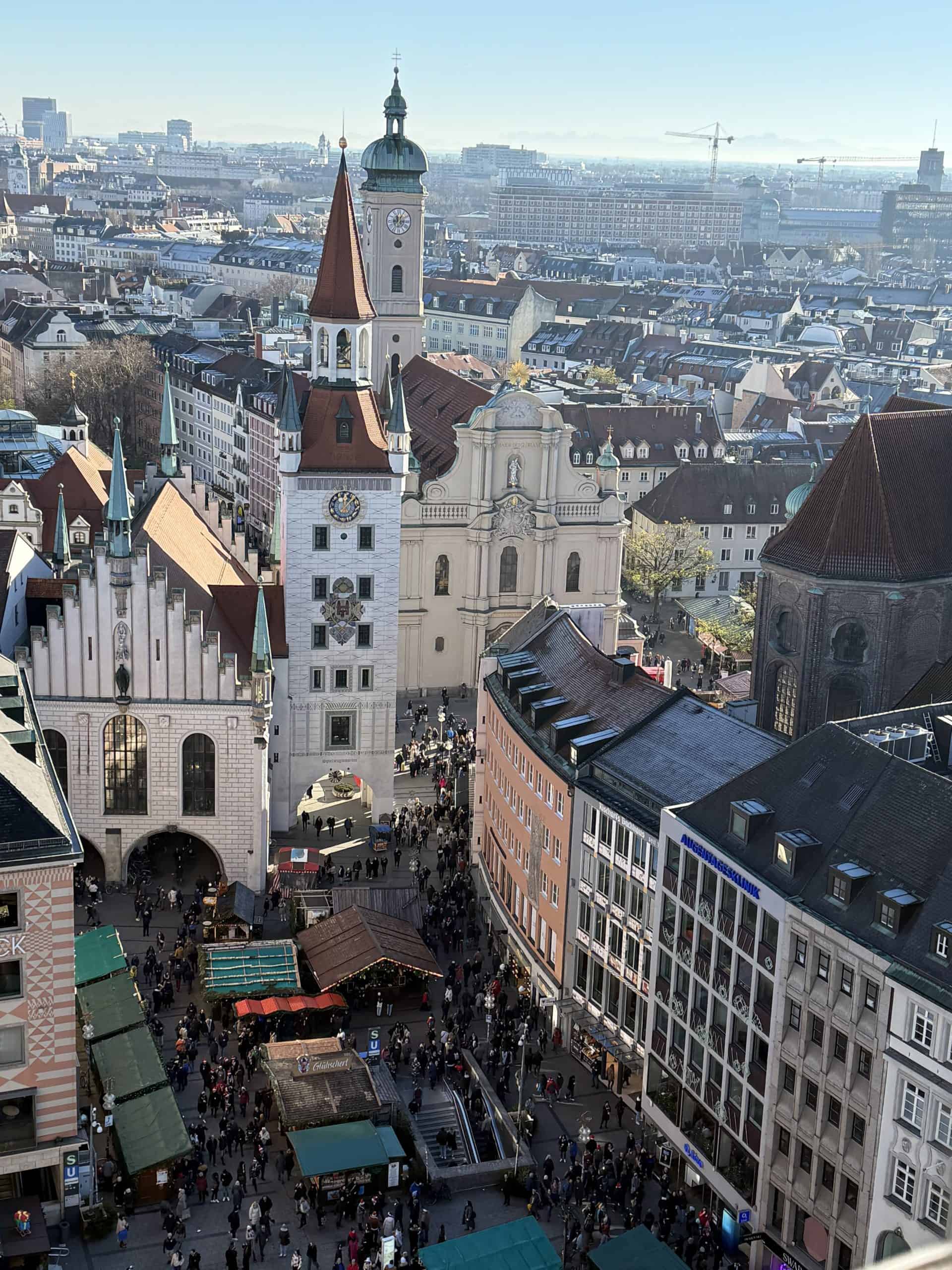
Take the elevator to the top of the New Town Hall for panoramic views over Munich’s rooftops and Marienplatz below. Though it’s not as high as some other viewpoints, it’s one of the most accessible towers in the city because there is an elevator. The views are incredible, and it’s easily one of my favorite photo spots in Munich.
St. Peter’s Church (Alter Peter)
St. Peter’s is Munich’s oldest parish church. Climb the 300 steps to the top of the tower for another incredible view of the city. It’s steep, but worth the effort. You’ll also spot the golden statue of St. Peter inside, said to bring good luck if you touch his foot.
This one does not have an elevator so you need to be in good physical condition to climb the tower.
Church of the Holy Spirit
Often overlooked, the Church of the Holy Spirit beside Viktualienmarkt has a plain exterior that hides a beautifully restored interior. Step inside to see elaborate frescoes and intricate altars dating back to the 18th century. It’s a quiet spot to take a break and appreciate one of Munich’s hidden gems.
Viktualienmarkt
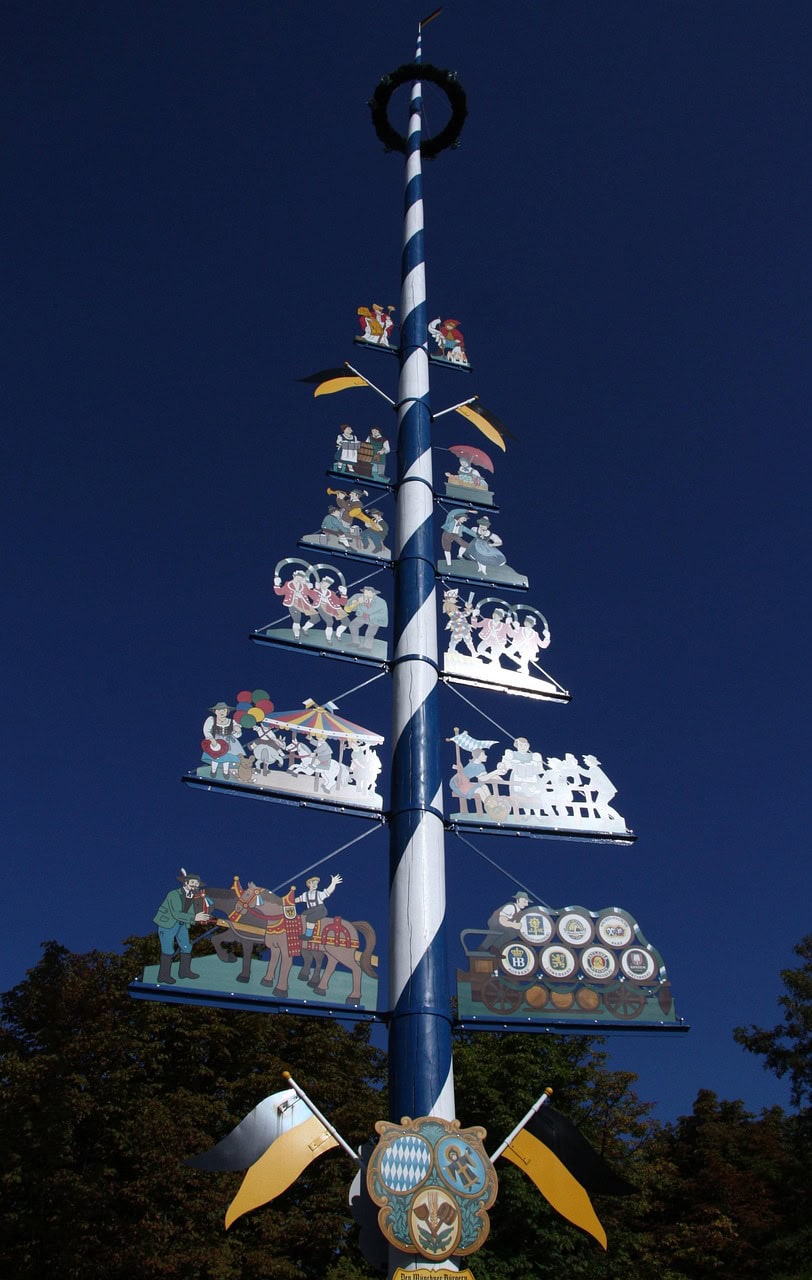
Viktualienmarkt is an open-air market and one of the best places to sample Munich’s local flavors. Grab a pretzel, cheese, or a sausage and enjoy it at one of the shaded beer garden tables. The maypole in the center is a typical Bavarian symbol, and the surrounding market stalls are perfect for picking up handmade crafts, local goods, and souvenirs.
Hofbräuhaus
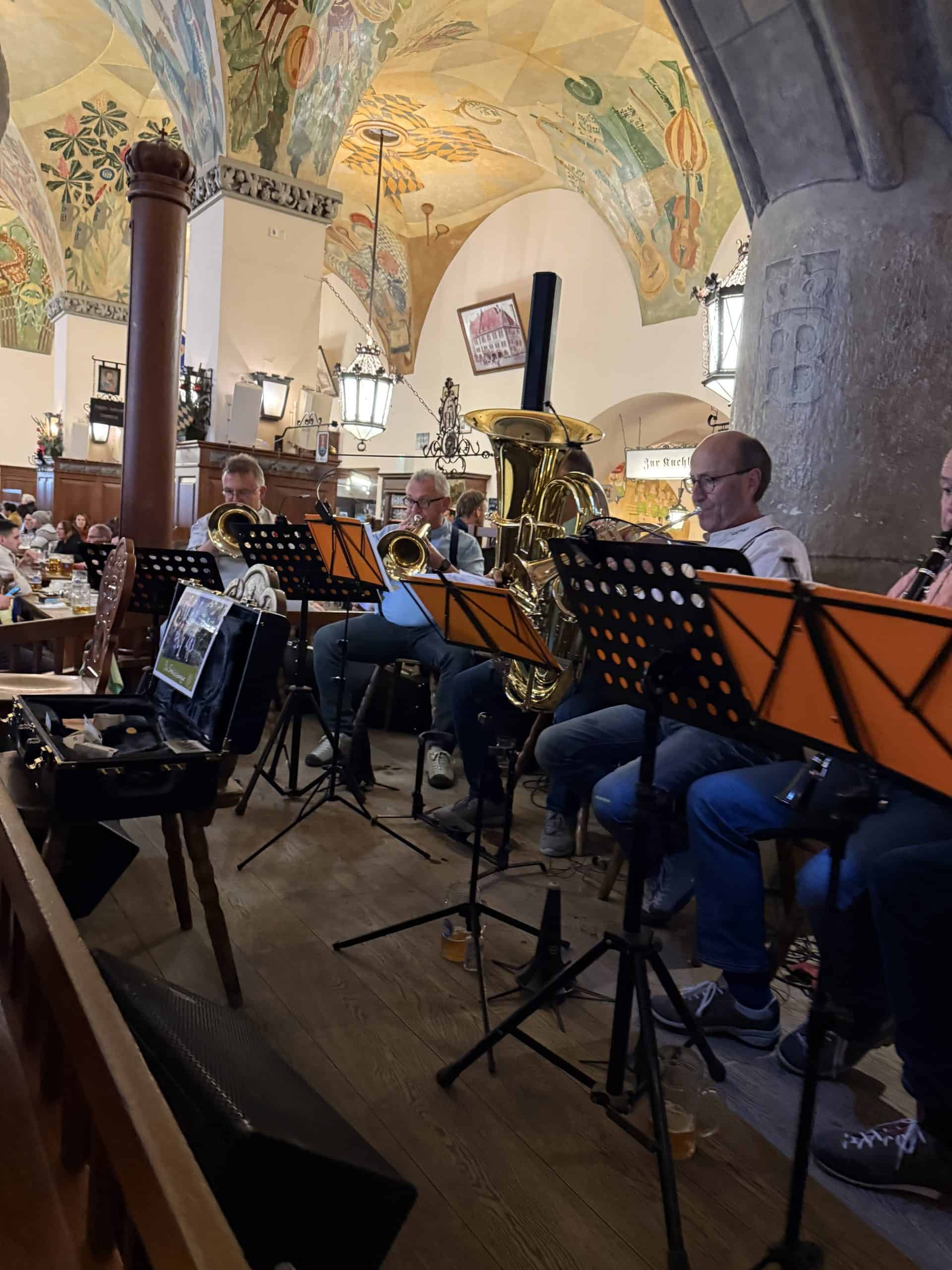
One of the most famous beer halls in the world, the Hofbräuhaus is both a must-try place to eat and an experience in itself. Yes, it’s touristy, but it’s also steeped in history and tradition. Founded in the 16th century by the Duke of Bavaria, it has been serving beer and Bavarian dishes for over 400 years.
We enjoyed the brass bands, food, servers in traditional dress, and of course the beer! It’s a fun stop whether you’re enjoying a full meal or just a beer.
Isartor (Isar Gate)
Marking the eastern edge of Munich’s Old Town, Isartor is one of three remaining medieval city gates. Built in 1337 as part of Munich’s second city wall, it still retains its original central tower and frescoes showing Emperor Ludwig’s return from battle. Restored after World War II, it now houses the Valentin-Karlstadt Museum, honoring Munich’s famous comedian. Look up to spot the quirky clock that runs backwards in his memory.
Residenz Palace, Domplatz, & Cuvilliés Theatre
Once home to Bavarian royalty, the Munich Residenz is the largest city palace in Germany. Inside, you’ll find ornate interiors like the Antiquarium and Hercules Hall, the Treasury housing the crown jewels, and the royal apartments of King Ludwig I. You can easily spend a few hours exploring everything the Residenz has to offer.
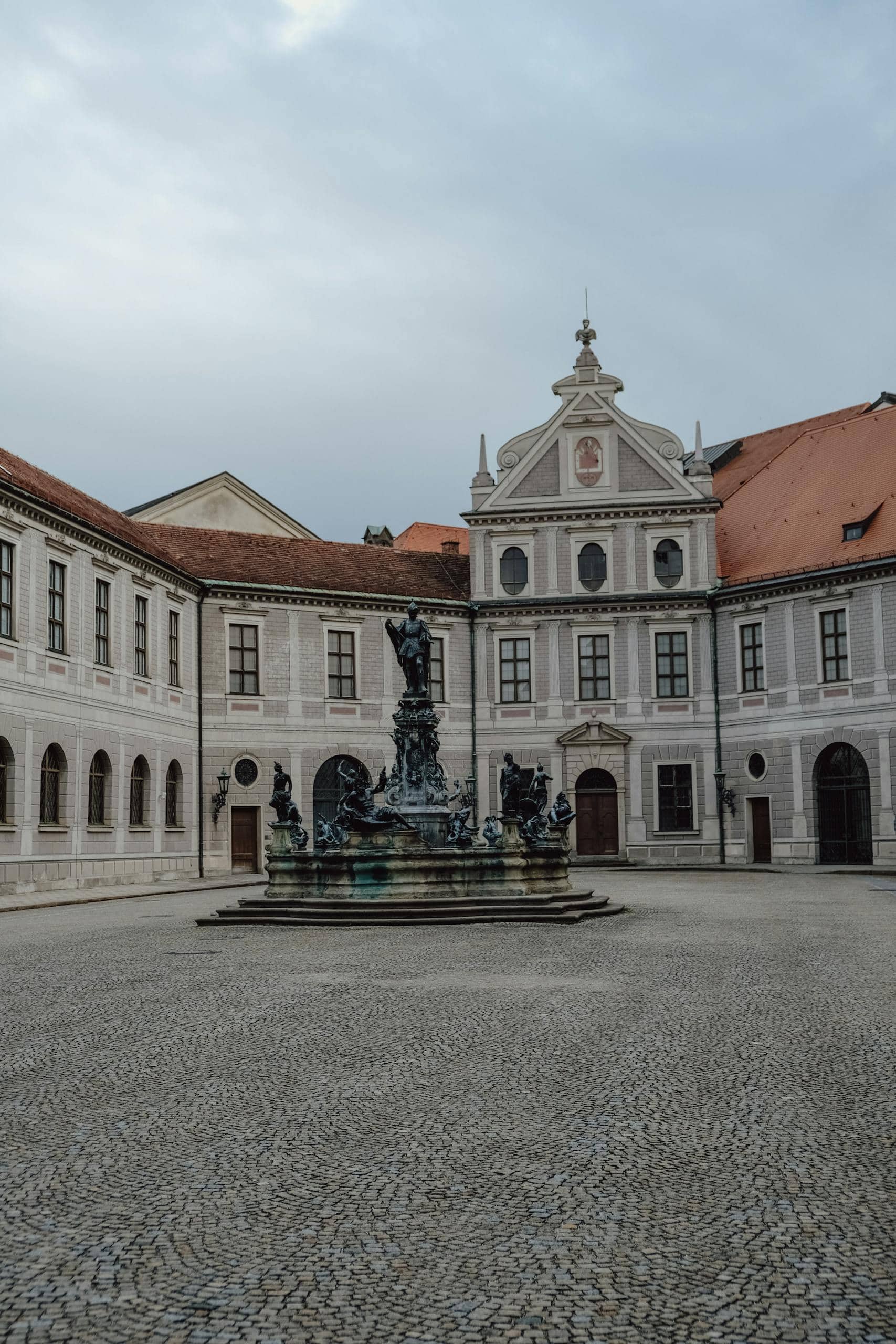
Also within the complex is the Cuvilliés Theatre, a Rococo design masterpiece known for its beautiful red and gold interior.
Just outside the Residenz is Domplatz, meaning Cathedral Square, a quieter square often overlooked by visitors.
🎄Seasonal Highlight: In December, don’t miss the Residenz Christmas Village tucked inside the palace courtyard.
National Theater (Bavarian State Opera)
The National Theater, home to the Bavarian State Opera, is an architectural highlight even if you’re not attending a performance. It anchors Max-Joseph-Platz, one of Munich’s most distinguished squares, designed in the early 19th century as part of King Ludwig I’s vision for a grand civic center. At the square’s center stands a statue of King Maximilian I Joseph, surrounded by the Residenz Palace and elegant covered walkways (arcades).
Frauenkirche & the Devil’s Footprint
The twin domes of the Frauenkirche are Munich’s most recognizable skyline feature. I used this church often to make sure I was walking in the right direction!
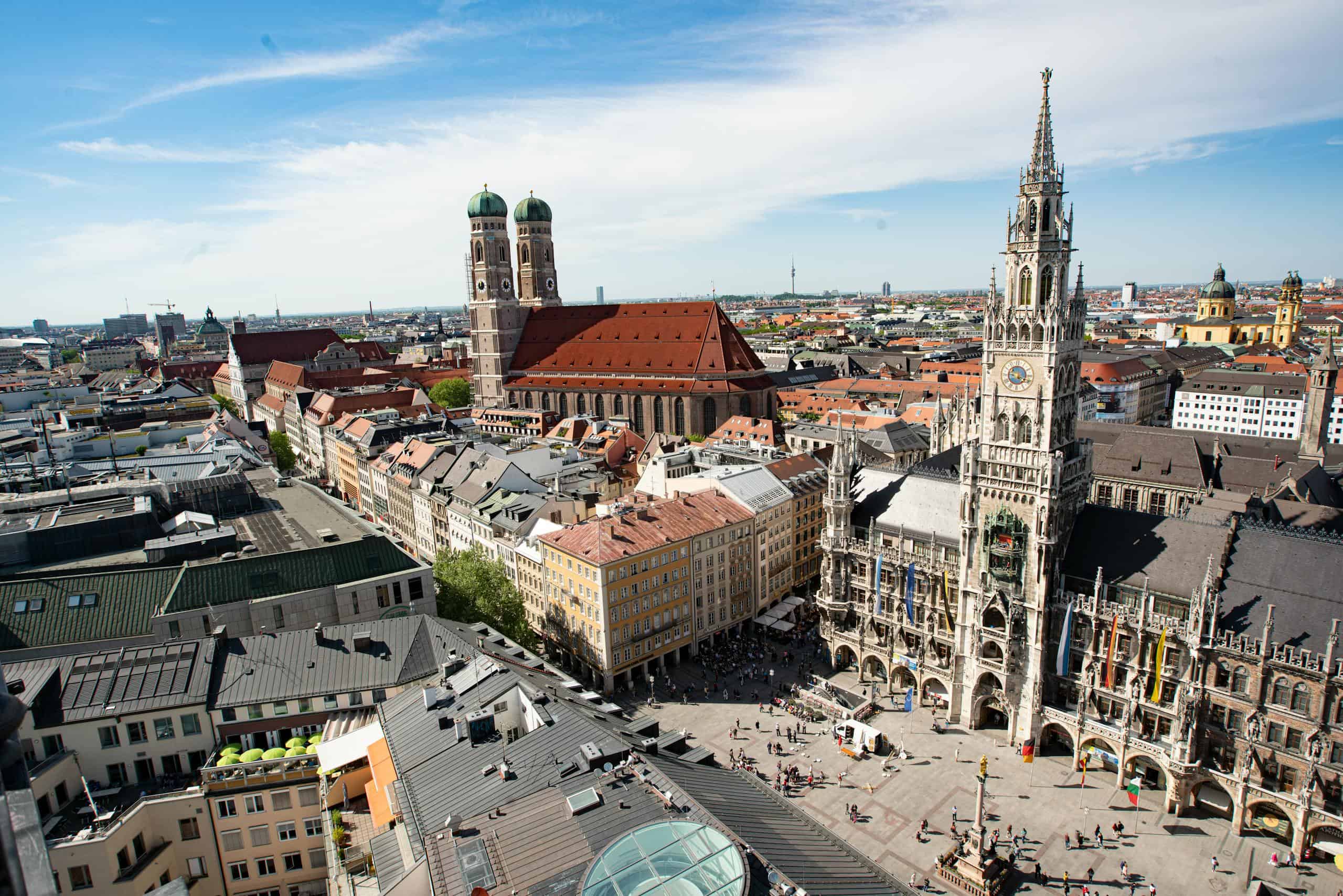
Inside the cathedral, look for the mysterious “Devil’s Footprint,” said to have been left by the devil himself in a moment of trickery. Beneath the church lies the Bishops’ Crypt, the final resting place of many of Munich’s bishops. If you’re up for a climb, the south tower rewards you with panoramic views over the city.
This tour climb is narrow and about 450 steps. It does not have an elevator so you need to be in good physical condition to make the climb.
Odeonsplatz, Theatinerkirche , & Feldherrnhalle
One of Munich’s most elegant squares, Odeonsplatz marks the start of Ludwigstrasse, the grand boulevard commissioned by King Ludwig I and inspired by Italian architecture. On one side stands the bright yellow Theatinerkirche (Theatine Church), a Baroque church with an ornate white interior that sometimes hosts classical concerts.
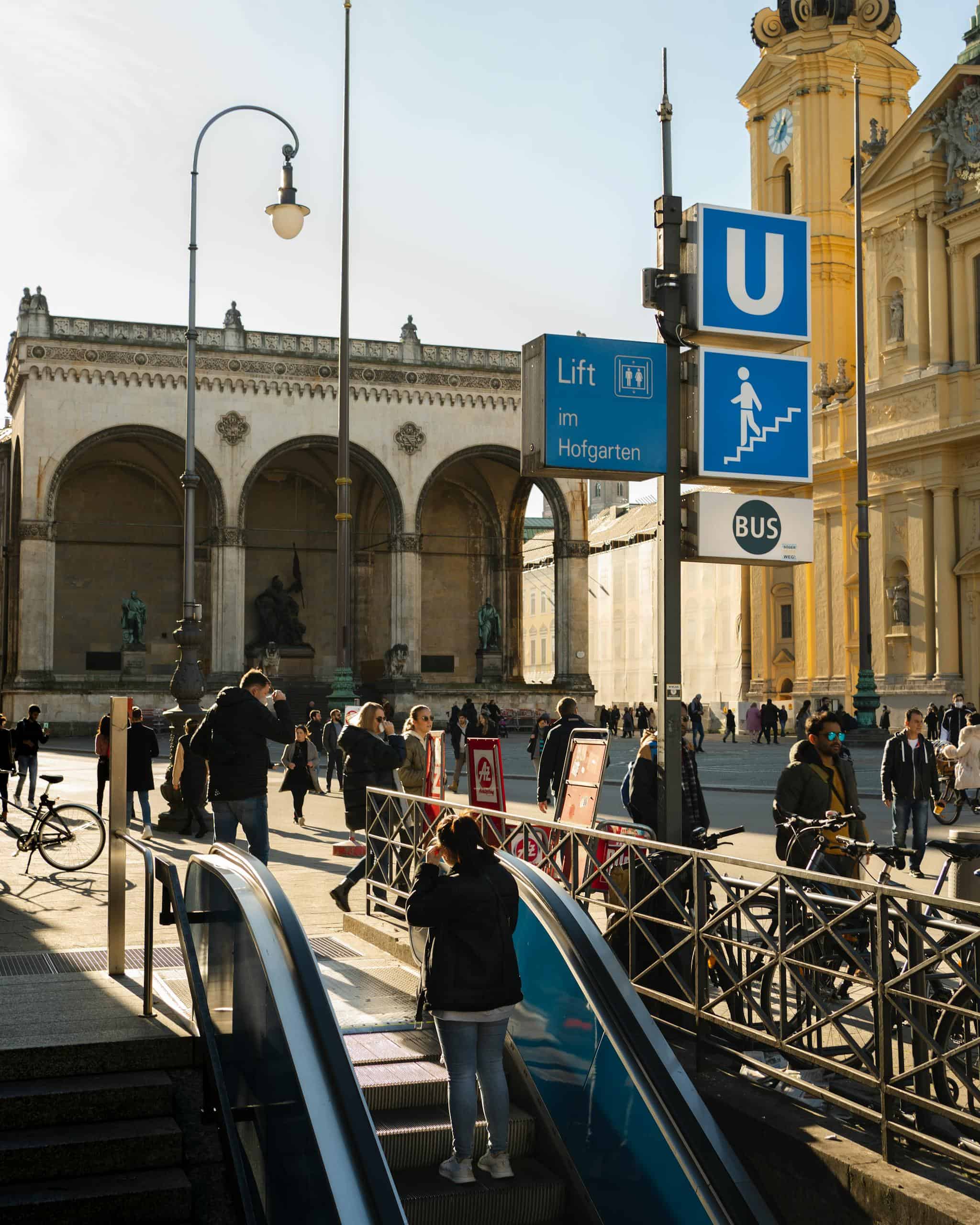
Opposite it is the Feldherrnhalle (Field Marshall’s Hall), an open-air loggia modeled after Florence’s Loggia dei Lanzi, built to honor Bavarian military leaders and later tied to key moments in Munich’s history.
🎄Seasonal Highlight: Just steps from Odeonsplatz, the Medieval Christmas Market at Wittelsbacherplatz offers handmade crafts, costumed vendors, and Christmas treats served with traditional wares like goblets. This market became one of my favorite themed markets!
Graggenau District Munich Old Town
Tucked between Odeonsplatz and Isartor, the Graggenau quarter is one of the oldest parts of Munich’s Old Town. Once home to craftsmen and the royal stables serving the nearby Residenz Palace, this area has deep historical roots. Today, it’s a mix of elegant architecture, small shops, cafés, and cultural landmarks like the Hofbräuhaus and the Old Town Hall. It’s a great place to get a feel for everyday life in Munich’s Old Town.
🗺️ Map of Munich Old Town Sites
To help you plan your route, here’s a map featuring all the major sights mentioned in this guide. Munich Old Town is extremely walkable, and having a visual guide makes it easy to group your stops by area.
➡️Tip: Click on the map and save to your phone or Google account before your trip so you can access it offline while exploring Altstadt.
🚶♀️ Tours in Old Town
Whether you want local insights, hidden stories, beer focused history, or just a great way to cover a lot in a short time, a tour is one of the best ways to explore Old Town Munich (Altstadt). These are a few top options:
✨ Guided Old Town Walking Tour
This 2‑hour walking tour covering the essentials including Marienplatz, St. Peter’s Church, Viktualienmarkt, the Residenz, and more. Tours are led by knowledgeable local guides and you’ll get lots of insider tips and history on the tour.
🍻 Bavarian Beer & Food Tour
If you want history with a side of hops, this evening beer tour is a must. This one includes three beers, snacks, and dinner. It comes highly recommended with a 4.9/5 rating.
🕔It starts at 5pm so still plenty of time to explore during the day!
🥾 Munich Old Town Self-Guided Walking Route
Maybe you prefer to go on your own. I’ve developed this self-guided walking route to help make your tour both efficient and historical.
Total distance: ~3 miles
Time: 3-4 hours at a relaxed sightseeing pace, longer if you stop in the museums
Start: Viktualienmarkt | End: Odeonsplatz
➡️Tip: Save this walking map to your phone or Google account before your trip so you can access it offline while exploring Munich Old Town.
1. Viktualienmarkt & Church of the Holy Spirit
Start your walking tour at Viktualienmarkt, Munich’s open-air market. Grab a coffee and a traditional Bavarian breakfast of Weißwurst, a traditional white sausage that’s a must-try for first-time visitors.
Before leaving, step into the Church of the Holy Spirit beside the market to see its frescoed rococo interior.
🚶♀️ Walk 2 minutes north to Marienplatz.
2. Marienplatz & the Glockenspiel
Arrive at Marienplatz, the heart of Munich’s Old Town, in time for the Glockenspiel show at 11 a.m. or 12 p.m. Watch the 16th-century wedding scene come to life and admire the facade of the Neues Rathaus (New Town Hall).
🎄Munich’s main Christkindlmarkt is located here from late November through Christmas Eve.
🕓 Tip: Arrive 10–15 minutes early for the best view.
3. Neues Rathaus Tower View (New Town Hall)
After the show, take the elevator up the New Town Hall tower for panoramic views of Munich’s rooftops and the square below. It’s one of my favorite views of the city.
🚶♀️ Head behind the square toward St. Peter’s Church.
4. St. Peter’s Church (Alter Peter)
Munich’s oldest parish church offers another spectacular city view if you’re up for the 300-step climb. Inside, look for the golden statue of St. Peter, said to bring good luck when you touch his foot.
🚶♀️ Continue east on Tal Street (~5 min) to reach Isartor.
5. Isartor (Isar Gate)
One of Munich’s three surviving medieval gates, built in 1337. Check out the frescoes, reverse-running clock, and the quirky Valentin-Karlstadt Museum inside.
🚶♀️ Walk back west along Sparkassenstraße (~7 min) toward Hofbräuhaus.
6. Hofbräuhaus & Graggenau District
Stop at the legendary Hofbräuhaus, one of the world’s most famous beer halls.
Enjoy a beer, traditional Bavarian meal, or simply soak in the music and atmosphere.
Wander nearby Graggenau District, one of Munich’s oldest neighborhoods filled with cafés and historic facades.
👉If you are planning a beer tour, you can skip this stop because the beer tour will stop here.
🚶♀️ Continue north along Residenzstraße (~5 min) towards Frauenkirche & Domplatz,
7. Frauenkirche & Domplatz
The Frauenkirche’s twin domes are a symbol of Munich. Step inside to find the Devil’s Footprint and the Bishops’ Crypt. The cathedral borders Domplatz, a peaceful square surrounded by historic buildings.
🚶♀️ Continue northeast to the Residenz (~5 min) towards Residenz Palace.
8. Residenz Palace & Cuvilliés Theatre
Explore the Munich Residenz, the grand palace of Bavarian royalty. Highlights include the Antiquarium, Treasury, and Cuvilliés Theatre.
🎄In December, don’t miss the Residenz Christmas Village tucked inside the palace courtyard.
🚶♀️ Exit west along Residenzstraße toward Max-Joseph-Platz.
9. Max-Joseph-Platz & National Theater
Anchored by the National Theater, home of the Bavarian State Opera, this neoclassical square is one of Munich’s most beautiful. A statue of King Maximilian I Joseph stands at its center.
🚶♀️ Walk a few minutes north to finish your walk at Odeonsplatz.
10. Odeonsplatz, Theatinerkirche & Feldherrnhalle (Finish)
End your route at Odeonsplatz, framed by Italian-style architecture. Admire the Theatine Church’s yellow Baroque façade and ornate white interior. See the Feldherrnhalle, modeled after Florence’s Loggia dei Lanzi.
🎄In December, just steps from here, is the Medieval Christmas Market at Wittelsbacherplatz.
🗺️ Route Summary
Viktualienmarkt / Holy Spirit Church → Marienplatz (Glockenspiel) → Neues Rathaus Tower → St. Peter’s Church → Isartor → Hofbräuhaus / Graggenau District → Frauenkirche / Domplatz → Residenz / Cuvilliés Theatre → Max-Joseph-Platz / National Theater → Odeonsplatz / Theatine Church / Feldhe
✅ Why this route works:
- Starts with breakfast or coffee at the market.
- Reaches Marienplatz right in time for the Glockenspiel show.
- Flows logically east to west through Old Town.
- Ends at Odeonsplatz for a finale or lunch stop nearby.
💡 Insider Tip: Keep an eye out for subtle World War II memorials as you explore Munich’s Old Town. Look for bronze cobblestones in Viscardigasse (“Shirker’s Alley”) just behind Feldherrnhalle, where locals once resisted giving the Nazi salute, and glass panels covering shrapnel marks in the Wounds of Memory installations. These quiet details tell powerful stories of resilience and remembrance that many visitors overlook.
🎄 Visiting Munich Old Town at Christmas
If you visit Munich in December, this same Old Town walk transforms into a festive Christmas experience. The Marienplatz Christkindlmarkt, Residenz Christmas Village, and Medieval Market near Odeonsplatz fill the streets with lights, festive music, and the scent of mulled wine. Every stop along this route is magical.
🍽️ Where to Eat & Drink in Old Town
Old Town is packed with cafés, beer halls, and plenty of spots for a quick snack or a long, leisurely meal. These are a few favorites:
Café Glockenspiel
Located right on Marienplatz, this Café Glockenspiel is perfect for a mid-day break or meal. The view of the square below alone makes it worth a stop.
Café Frischhut
A short walk from Viktualienmarkt, Café Frischhut is the place to go for fresh, warm Schmalznudeln (think doughnut meets funnel cake). It’s popular with locals and fills up fast in the morning. Grab your pastries and eat them standing at one of the small tables outside.
Augustiner Klosterwirt (Local Favorite)
If you want a classic Bavarian meal in a traditional setting, Augustiner Klosterwirt is a great pick and a local favorite. The food is good, the beer is excellent, and the staff offers friendly service.
Viktualienmarkt Food Stalls
For something casual, grab a sausage sandwich, cheese plate, or a warm pretzel from the Viktualienmarkt open-air market vendors and sit at one of the shared beer garden tables. It’s a great way to sample different foods &/or beer and soak in the local atmosphere, especially when the weather is nice.

This is also a great spot to try a traditional Bavarian breakfast of Weisswurst and sweet mustard with a soft pretzel.
Hofbräuhaus
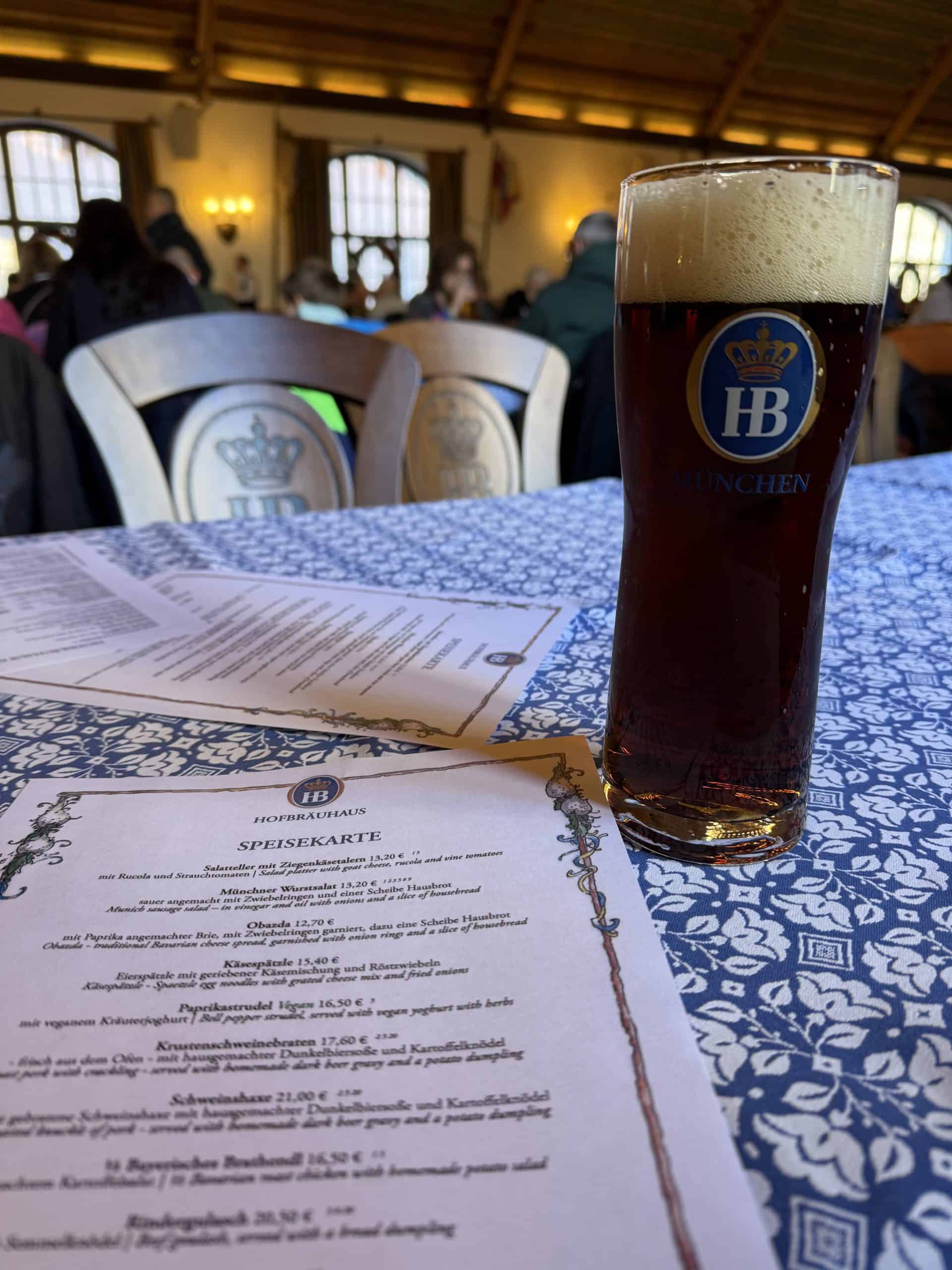
Hofbräuhaus is a must-try for the traditional Bavarian food options, beer, and experience. Yes it’s touristy, but worth it. The live music, waiters in traditional dress, and communal seating make it especially fun. Even if you just pop in for a drink, it’s worth the stop.
Other Picks
There are also excellent restaurants tucked around Frauenkirche and along Sporerstraße.
Nürnberger Bratwurst Glöckl – Famous for its sausages and local comfort food.
Augustiner am Dom – A classic Bavarian beer hall with hearty dishes and a cozy atmosphere.
Andechser am Dom – Known for traditional Bavarian specialties and a welcoming, authentic vibe.
🛎️ Best Hotels in Munich Old Town
Staying in Munich Old Town means you’re never more than a few steps from the city’s top sights, markets, and restaurants. Whether you’re looking for a boutique experience, an apartment-style stay, or luxury comfort, there’s something for every style and budget. Here are a few top picks:
Bob W Munich Old Town (Apartment Style)
Bob W – This hotel offers apartment-style rooms with thoughtful design and self-check-in convenience. The location is technically in Ludwigsvorstadt, but it’s a great option just bordering the Old Town if you want a little more space and kitchen amenities.
Mandarin Oriental Hotel (Luxury)
Mandarin Oriental Hotel – A five star hotel with elegant rooms, a rooftop pool, and panoramic views of the city, all just a short distance from Marienplatz. It also provides an airport shuttle and family friendly room options.
Hotel MIO by Amano (Mid-Range)
Hotel MIO by AMANO – A centrally located hotel just a short walk from Marienplatz, offering air conditioning, private bathrooms with free toiletries, and an excellent breakfast buffet.
Premier Inn Munich (Budget)
Premier Inn Munich -This hotel includes air conditioning, private bathrooms, free WiFi, and an optional breakfast. It is well connected to public transport and sits about a ten minute walk from Marienplatz.
➡️Want more options of where to stay in Munich? Check out my complete guide!
🚋 How to Get Around
Munich’s Old Town is compact and easy to navigate on foot. Knowing a few transit tips will help you get around the rest of the city with ease.
🚶 Walking is the Best Way
Nearly everything in Munich Old Town (Altstadt) is within a 10 to 15 minute walk. Wear comfortable shoes, especially if you’re tackling church towers or wandering cobblestone streets. Many streets in Old Town are pedestrian-only, which makes exploring extra pleasant.
🚆 Public Transit
Old Town is extremely well-connected by U-Bahn (subway), S-Bahn (commuter trains), and trams. Marienplatz is the central hub where multiple U and S lines intersect.
From the airport, take the S8 or S1 train directly to Marienplatz. The ride takes about 40 minutes.
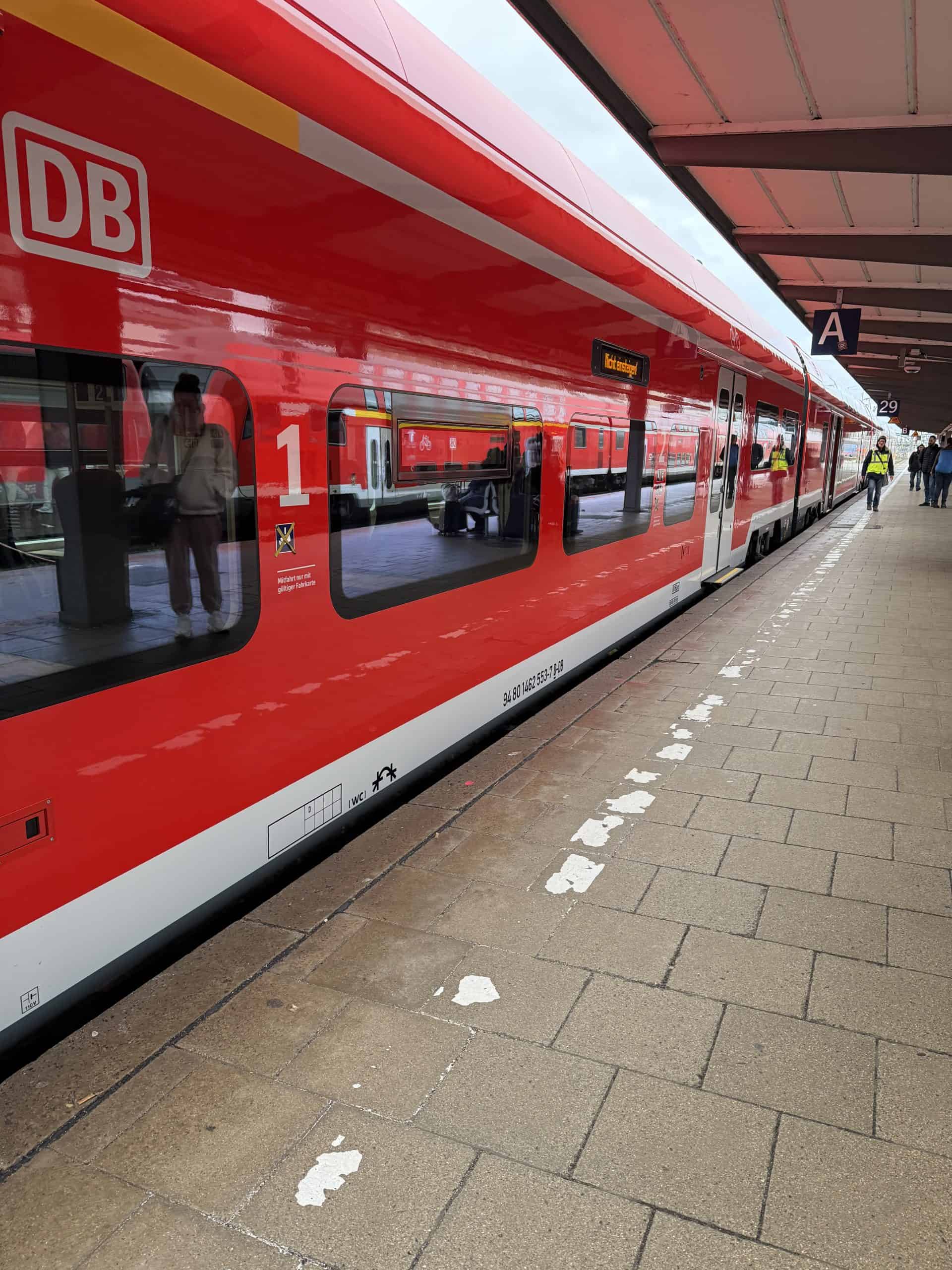
From the main train station (Hauptbahnhof), you are just two S-Bahn stops from Marienplatz or a 15-minute walk.
🚖 Taxis and Ride Apps
Taxis are widely available but more expensive than public transport. Uber operates in Munich, but availability can vary. In most cases, walking or using the U-Bahn is faster and easier in central areas.
💡 Pro Tip: If you plan to use public transportation frequently or visit several museums and attractions, consider the Munich City Card. It includes unlimited rides on public transport and offers discounts at dozens of sights, shops, and restaurants.
❓FAQs
Below are some answers to questions I often get asked about the best things to do in Munich Old Town.
1. Do I need cash in Munich?
Yes, especially for small purchases. Many bakeries, market stalls, and casual restaurants are cash-only or set minimums for card payments. Always carry some euros just in case.
2. Are shops open on Sundays?
No, most stores and supermarkets are closed on Sundays and public holidays. Exceptions include restaurants, convenience shops at major train stations, and airport vendors. Stock up in advance if you need snacks or essentials.
3. Are museums and tourist attractions open on Sundays?
Yes! Many of Munich’s top tourist destinations and museums are open on Sundays, making it a great day for sightseeing and cultural visits.
4. Is English widely spoken?
Yes, especially in the city center. Most hotel staff, waiters, and shopkeepers in Old Town speak at least some English. A few basic German phrases are appreciated, but you will have no trouble getting around.
5. Can I drink the tap water?
Yes. Munich’s tap water is high-quality and completely safe to drink. Bring a reusable bottle to fill throughout the day.
6. What should I see in Munich outside of Old Town?
My One Day in Munich guide has lots of options for places outside of Old Town and could easily fill a couple of days. A few highlights include the English Garden (Englischer Garten) complete with surfers (yes surfers!) and peaceful walking paths, museums, the site of Octoberfest, and a former Olympic Village.
📝 Final Thoughts
If it’s your first time in Munich, Old Town is exactly where you want to be. It’s walkable, well-connected, and packed with some of the city’s most iconic sights.
You can explore churches, shop at Viktualienmarkt, climb St. Peter’s Tower, or grab a coffee and strudel at Cafe Glockenspiel. Munich Old Town (Altstadt) offers an easy mix of culture and comfort. Even in just one day, you can get a real feel for the city’s history and everyday life.
I hope this Munich Old Town guide helps you plan your route, pick a great hotel, and make the most of your time in the heart of Munich.
🏰 Old Town Munich at a Glance
Here’s a quick summary to help you plan:
- Top Sights: Marienplatz, Frauenkirche, Viktualienmarkt, Residenz Palace, St. Peter’s Church, Theatine Church
- Best Views: St. Peter’s Tower, New Town Hall viewing platform, Café Glockenspiel
- Food Favorites: Augustiner Klosterwirt, Hofbräuhaus, Viktualienmarkt stalls, Nürnberger Bratwurst Glöckl
- Tours Worth Booking: Old Town walking tour, Bavarian beer and food tour
- Where to Stay: Bob W (Apartment Style), Mandarin Oriental Hotel (Luxury), Hotel MIO by AMANO (Mid-Range), Premier Inn Munich (Budget-Friendly)
- Holiday Bonus: Marienplatz Christkindlmarkt and Residenz Christmas Village (late November to December)
Transit Tip: Walk when you can, and grab the Munich City Card for transit and attraction discounts.
Related Munich Posts
