
Travel and Tinsel contains affiliate links and is a member of the Amazon LLC Associates Program. If you make a purchase using one of these Amazon links, we may receive compensation at no extra cost to you. Read my disclaimer for more information.
Munich is one of the easiest cities in Europe to use as a home base for half and full day trips. With efficient train connections and a central location in Bavaria, you can explore castles, alpine towns, and UNESCO cities without switching hotels.
When I visited Munich, we did a couple of day trips. I loved how simple it was to catch a morning train, explore a new city for the day, and return in the evening. No need to pack up or change hotels.
🧭 What qualifies as a “doable” day trip? For this list, I’ve focused on destinations that are about 2.5 hours or less from Munich by train or car. Less time commuting means more time exploring.
If you’re dreaming of Neuschwanstein’s fairytale castle or walking in Mozart’s footsteps in Salzburg’s old town, these day trips from Munich include both iconic destinations and lesser-known gems with practical tips, personal stories, and seasonal highlights sprinkled in. Let’s get started!
Munich as a Day Trip Hub: What to Know Before You Go
Before you head out on your Bavarian adventures, it helps to know a few key tips to make your day trips smooth and budget-friendly.
Bayern Ticket (Bavaria Ticket)
The Bayern Ticket is a great deal for regional travel in Bavaria and nearby cities like Salzburg and Innsbruck. It’s valid on most local trains, buses, trams, and S-Bahn lines and can be purchased online or at the station.
- Valid after 9 a.m. on weekdays and all day on weekends
- Covers RE, RB, and S-Bahn trains
- Does not cover high-speed ICE or IC trains
💡 Pro Tip: The Munich City Card is also a great option for the day trips close to Munich. It offers unlimited U-Bahn, S-Bahn, tram, and bus rides, plus discounts at museums, restaurants, and shops if your trip includes time in Munich.
High-Speed Trains and When to Book Early
For longer or faster routes, booking high-speed trains in advance can save you a lot. Look for Sparpreis (saver fare) tickets on the Deutsche Bahn website. These are limited but can be very affordable if booked early.
German Rail Pass
If you’re planning multiple train travel days within Germany, the German Rail Pass might be a good fit. It includes both high-speed and regional trains and can be more flexible if you’re covering a lot of ground over several days. This is especially helpful if your trip includes cities outside of Bavaria.
Train Stations Are Easy to Navigate
Most of Munich’s train journeys depart from München Hauptbahnhof (Main Station). The station is centrally located and walkable from many hotels. Platforms are clearly marked, signage is available in English, and the Deutsche Bahn app makes it easy to track schedules and platforms.
Best Day Trips From Munich
If you’re chasing castle views, stepping into history, or looking for a quick escape to the mountains, these destinations are all easy to reach from Munich. Each one offers something unique and memorable, all within a day’s journey.
1. Salzburg: A City Rich in Music History (1 hr 45 min)
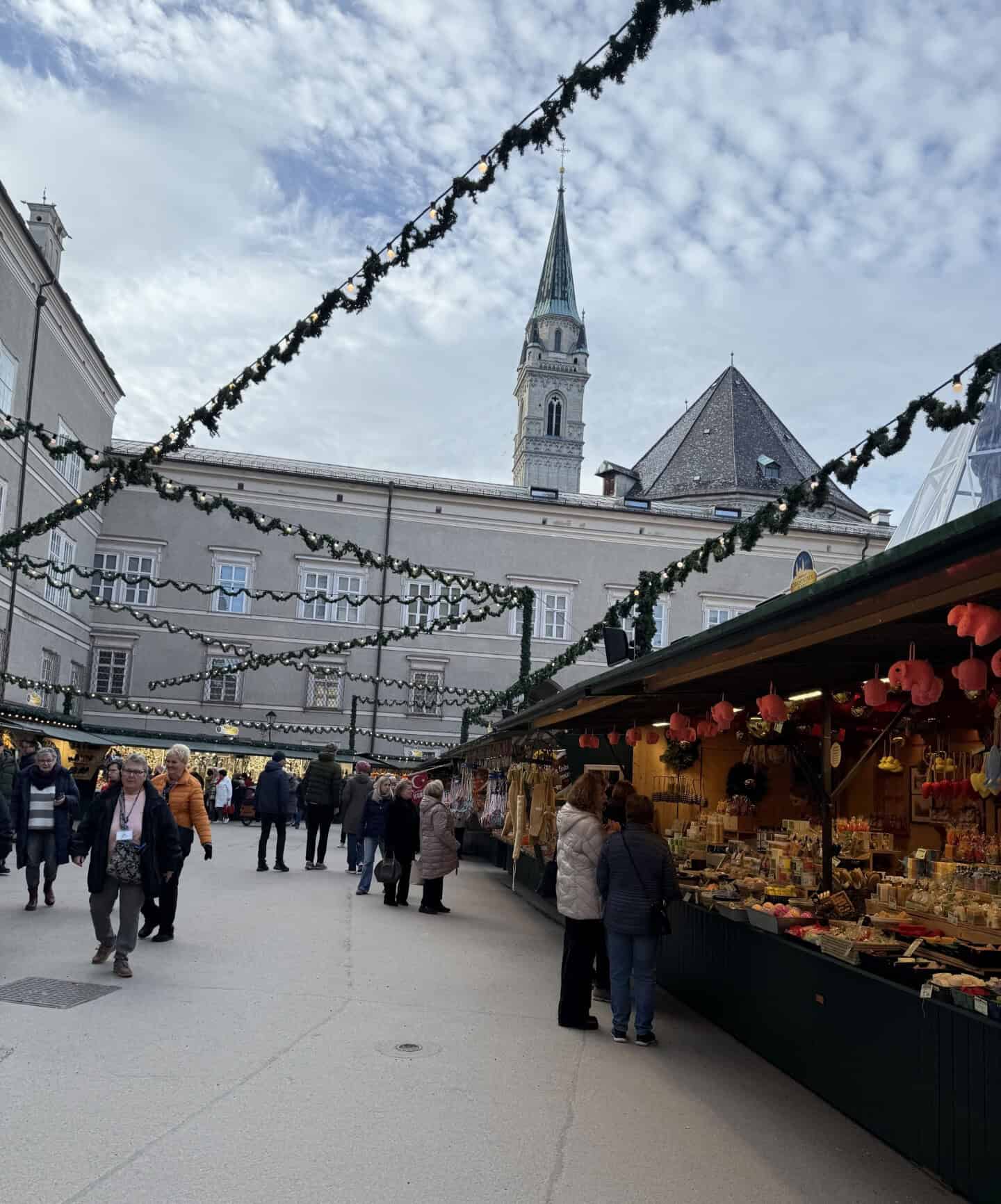
Salzburg is one of the most charming cities you can reach from Munich, and it’s one of my personal favorites. I visited during the Christmas market season and loved how walkable, historic, and scenic it was. Known for Mozart’s birthplace, The Sound of Music, and its alpine setting, this city blends music, culture, and storybook charm.

What to See and Do
- Mozart’s Birthplace on Getreidegasse, Salzburg’s most famous shopping street
- Sound of Music Tour with scenic filming locations (I did this and highly recommend it in this full review)
- Old Town Salzburg, a UNESCO site filled with baroque architecture and cobblestone streets
- Lunch at St. Peter Stiftskulinarium, the oldest restaurant in Europe. We ate here on my visit! It was a great place to try traditional Austrian dishes! 👉Pro Tip: Make a reservation!
- Mirabell Gardens, ideal for peaceful walks and a Sound of Music filming location
Bonus: The Silent Night Chapel
This small memorial marks the spot where the beloved Christmas carol Silent Night was first performed. Located in Austria just north of Salzburg about 30 minutes by train or bus in Oberndorf.
🎄Salzburg Christmas Market Highlight
If you’re visiting in winter like I did, Salzburg’s Christmas markets are a must. The main Salzburger Christkindlmarkt in Residenzplatz and Domplatz is one of the oldest in Europe. There are also smaller markets near Mirabell Palace and up by the fortress, each with its own charm.
➡️The Salzburg Christmas Markets were some of my favorites in Europe! 🎄
How to Get to Salzburg from Munich
- By Train: Around 1 hour 45 minutes from Munich Hauptbahnhof. We found it very easy to get to Salzburg by train. There are multiple trains every day. Buy tickets in advance to save money.
- By Car: About 1.5 hours
- Guided Option: Tours available and include round-trip transport and walking tours if you prefer to have everything done for you!
Salzburg: Why I Like It
Salzburg blends history and culture in a city that is easy to explore on foot. Walking the same streets as Mozart and seeing the filming locations from The Sound of Music made it one of the most memorable day trips of my trip to Munich.
➡️Why I think Salzburg is definitely worth the visit.
2. Neuschwanstein Castle & Linderhof: A Fairytale Duo (2–2.5 hrs)
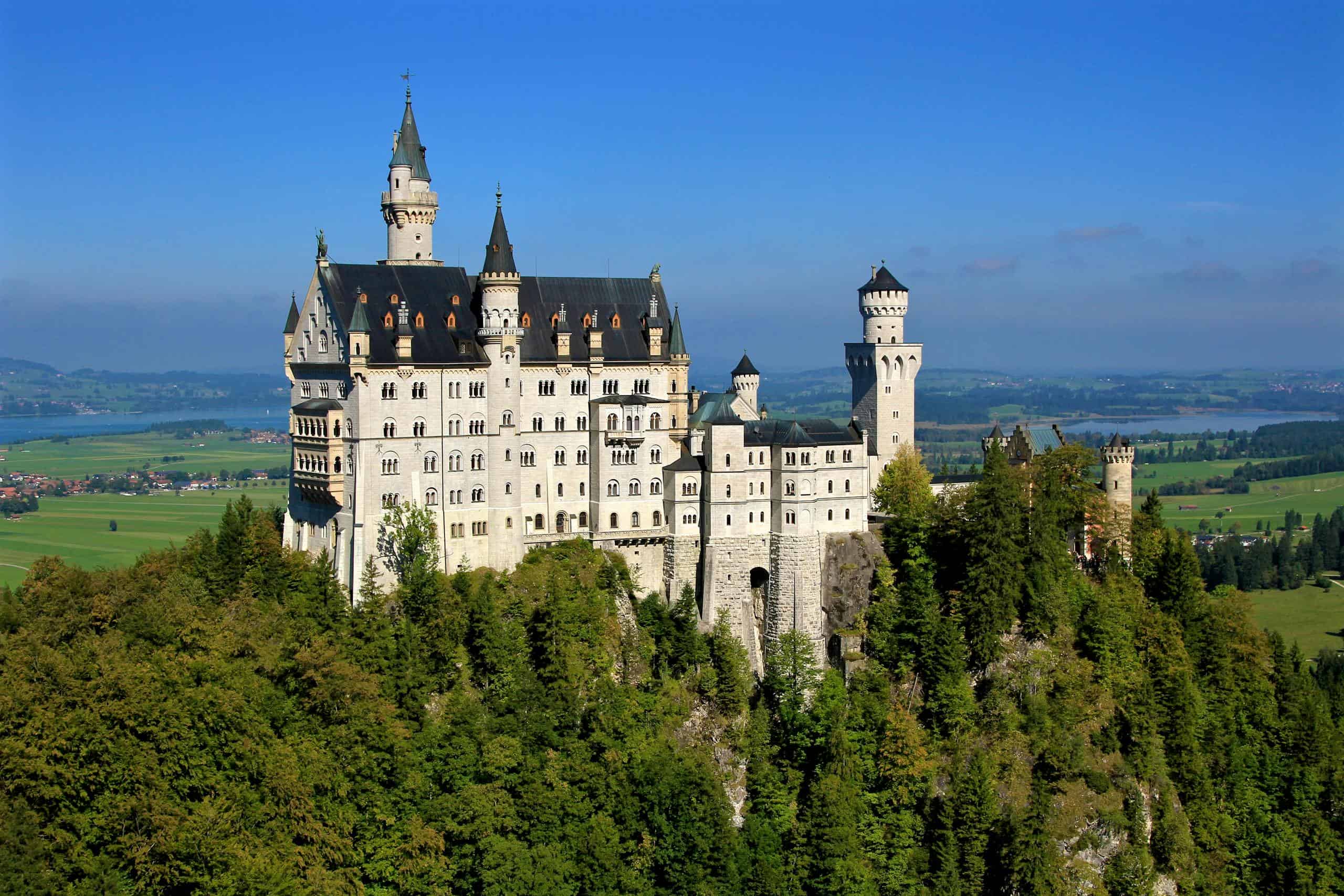
Neuschwanstein Castle is one of Germany’s most iconic and most photographed landmarks, famously known as the real-life inspiration for Disney’s Sleeping Beauty Castle. Often paired with nearby Linderhof Palace, it’s possible to visit two stunning, historical royal sites in one day.
What to See and Do
- Tour Neuschwanstein Castle only available by guided tour
- Walk to Marienbrücke, aka Mary’s Bridge, for the postcard view over the castle and valley. This is the iconic castle view you see in many pictures.
- Visit Linderhof Palace, King Ludwig’s smaller, French-inspired residence
- Stop in the village of Hohenschwangau for shops, cafés, and alpine views
How to Get to Neuschwanstein & Linderhof from Munich
- By Train + Bus: Take the train to Füssen (about 2 hours), then a short bus to Hohenschwangau for Neuschwanstein. Linderhof requires a car or a guided tour to visit both in one day.
- By Car: Around 1 hour 45 minutes to Neuschwanstein and 45 more minutes to Linderhof
- Guided Option: A full-day Fairytale Castles Tour from Munich covers both castles with transport and guides included. I highly recommend the guided tour unless you have a car.
Winter Note
Snow on the castle rooftops and alpine backdrop make this one of the best winter scenes in Bavaria. Dress warmly and wear sturdy shoes in case some paths are icy.
3. Dachau Concentration Camp: History That Must Be Remembered (30–40 min)
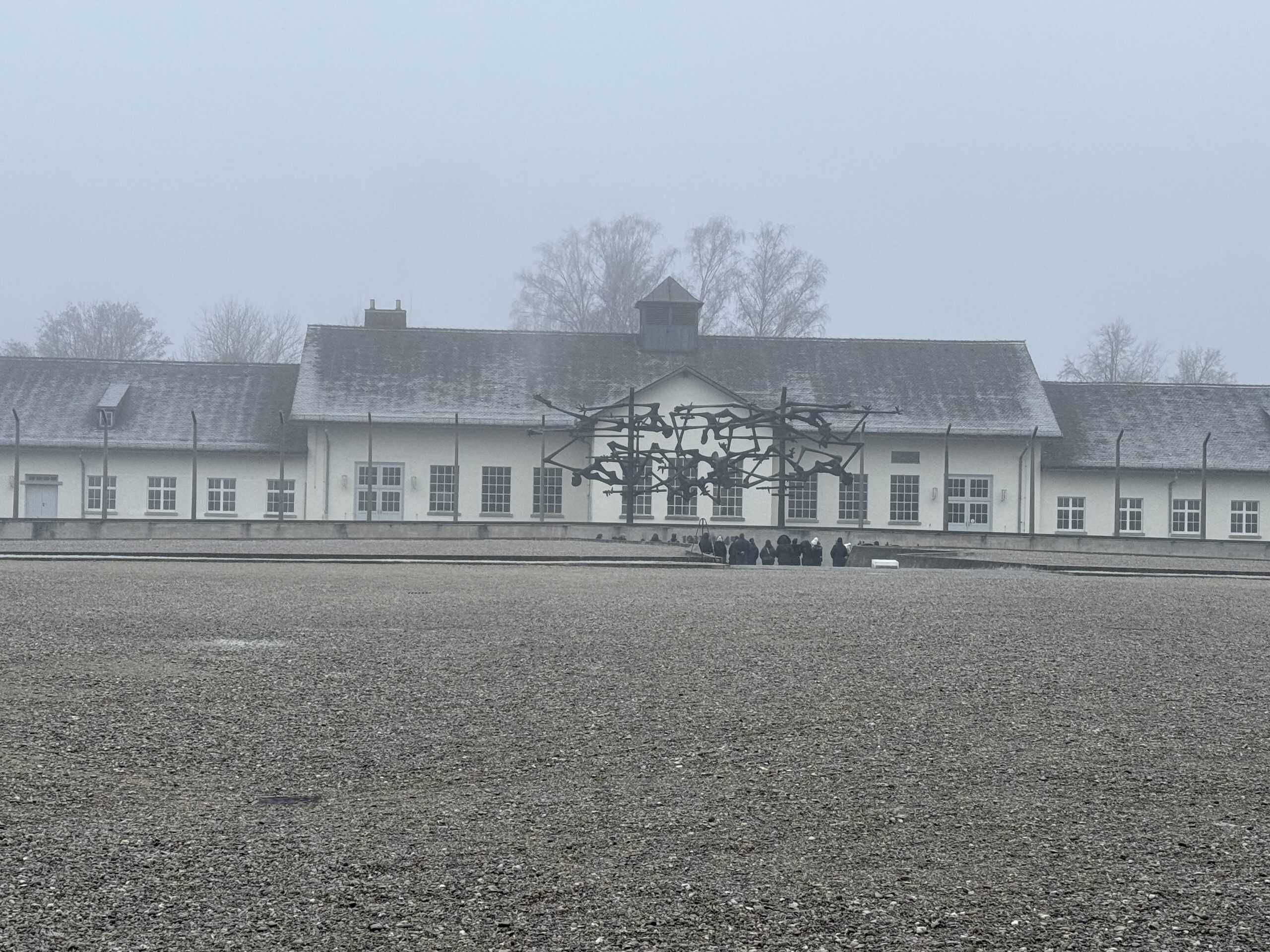
Our visit to Dachau Concentration Camp Memorial Site was one of the most sobering and important day trips we took from Munich, but it was still totally worth it. As one of the first Nazi concentration camps, it stands today as a powerful place of remembrance and education.
What to See and Do
- Museum and Exhibits detailing the history of the camp, daily life of prisoners, and rise of the Nazi regime
- Memorial Sites including the reconstructed barracks, crematorium, and religious memorials
- Documentary Film available in multiple languages
- Audio Guides and App for a self-guided experience at your own pace. We did the audio guide and found it very easy to follow and informative.
How to Get to Dachau from Munich
- By Train + Bus: Take the S2 train from Munich to Dachau station, then Bus 726 to the memorial site (about 30–40 minutes total travel time)
- We found it easy to navigate using directions from the official website. Signage and bus connections were clear and straightforward. Locals were friendly if we had questions.
- By Car: Roughly 30 minutes from Munich
- Guided Option: Highly rated guided tours are available if you’d like everything done for you plus a guide.
Dachau: Why You Should Visit
Dachau is an essential day trip for anyone interested in understanding Germany’s history. It is a sobering experience that leaves a lasting impact.
4. Rothenburg ob der Tauber: Back to Medieval Times (2.5 hrs)
Rothenburg ob der Tauber is one of Germany’s best-preserved medieval towns, known for its intact city walls, half-timbered buildings, and cobblestone streets. With its storybook architecture and walkable old town, it’s a favorite for both photographers and history lovers.
What to See and Do
- Stroll the Old Town Walls for views of towers, gardens, and tiled rooftops
- Visit the Käthe Wohlfahrt Christmas Village, a year-round shop featuring traditional German ornaments and nutcrackers
- Tour the Medieval Crime Museum, filled with artifacts and strange punishments from the Middle Ages
- Climb the Town Hall Tower for panoramic views of the town and countryside
- Try a Schneeball, a local pastry made of shortcrust dough and covered in powdered sugar or chocolate

🎄Rothenburg Christmas Market Highlight
The Reiterlesmarkt takes place in the town’s main square from late November to December. If you’re visiting during this time, it’s an easy addition to your itinerary, but Rothenburg is worth visiting in any season.
How to Get to Rothenburg ob der Tauber from Munich
- By Train: About 2.5 hours with 1–2 transfers (typically in Nuremberg and Steinach)
- By Car: Around 2 hours and 15 minutes
- Guided Option: Day tours from Munich often combine Rothenburg with stops in other towns like Harburg
Why You Should Visit
Rothenburg is a true medieval experience in Germany, with walkable streets, historical landmarks, and unique museums all packed into a compact town center.
5. Innsbruck: Alpine Charm Across the Border (2 hrs)
Innsbruck, nestled in the Austrian Alps, makes for a scenic and surprisingly easy day trip from Munich. Known for its mountain views, colorful old town, and history, it offers a blend of outdoor adventure and culture.

What to See and Do
- Stroll through Old Town, home to the Golden Roof, pastel-painted buildings, and cobbled streets
- Take the Nordkette Cable Car for panoramic views of the Alps just minutes from the city center
- Visit Ambras Castle, a Renaissance-era palace with art collections and gardens
- Stop by the Court Church, known for its dramatic black bronze statues
- Walk along the River Inn for postcard-perfect views of the mountains and colorful townhouses
🎄Innsbruck Christmas Market Highlight
Innsbruck hosts several markets from mid-November through December, each with its own style. The Old Town Market is set beneath the Golden Roof, while the Maria-Theresien-Strasse Market is more modern.
How to Get to Innsbruck from Munich
- By Train: About 1 hour 50 minutes direct from Munich Hauptbahnhof
By Car: Around 2 hours depending on traffic - Guided Option: Innsbruck guided city tour once you arrive
Why You Should Visit
Innsbruck combines alpine beauty with history, making it an ideal mix of nature and culture just across the border.
6. Nuremberg: Castles, Canals, and Christmas Market (1–2 hrs)
Nuremberg is one of Bavaria’s most vibrant cities, known for its medieval old town, impressive castle, and riverside strolls. It’s especially famous during the holiday season for the Christkindlesmarkt, one of the oldest and most beloved Christmas markets in the world.

What to See and Do
- Walk up to Nuremberg Castle, a fortress complex offering views of the old town
- Stroll through the Altstadt, home to half-timbered houses, historic squares, and cafés
- Visit the Documentation Center, a powerful museum covering the Nazi era and the Nuremberg Trials
- Explore the Toy Museum, showcasing the city’s legacy as a toy-making capital
- Relax along the Pegnitz River, which winds through scenic bridges and medieval towers
🎄Nuremberg Christmas Market Highlight
Nuremberg’s Christkindlesmarkt is one of the oldest and most famous in the world. Held in the main square, it features traditional red-and-white striped stalls, handmade ornaments, gingerbread, and visits from the Christkind. A nearby children’s market offers family-friendly activities and treats.
How to Get to Nuremberg from Munich
- By Train: High-speed trains take about 1 hour; regional trains take about 2 hours
- By Car: Around 1 hour 45 minutes
- Guided Option: Day trip tours from Munich are available.
Why You Should Visit
Nuremberg is rich in history and atmosphere, with one of Europe’s most iconic Christmas markets and a compact old town that’s easy to explore on foot.
7. Regensburg: UNESCO Medieval City by the Danube (1.5 hrs)
Regensburg is a beautifully preserved medieval city located on the banks of the Danube River. With its alleyways, towering cathedral, and the oldest stone bridge in Germany, the entire old town has earned UNESCO World Heritage status.
What to See and Do
- Walk across the 12th-century Stone Bridge, one of the city’s most iconic landmarks
- Visit Regensburg Cathedral, a gothic masterpiece known for its twin spires and stained glass
- Stroll through the Old Town, filled with pastel buildings, hidden courtyards, and history
- Stop by the Old Sausage Kitchen, a riverside spot serving grilled sausages since the 1100s
- Browse the shops on Goliathstrasse for everything from books to local crafts
🎄Regensburg Christmas Market Highlight
Regensburg hosts multiple markets during the Advent season. The Romantic Christmas Market at Thurn and Taxis Palace is especially unique, with stalls set up in a courtyard lit by torches and lanterns. There’s also a traditional market in Neupfarrplatz and a craft-focused market at Kohlenmarkt.
How to Get to Regensburg from Munich
- By Train: Around 1.5 hours (direct regional trains available)
By Car: About 1 hour 30 minutes - Guided Option: Tours are available once you arrive.
Why You Should Visit
Regensburg offers a mix of medieval architecture and riverside relaxation, with fewer crowds than other Bavarian cities and plenty to discover on foot.
8. Berchtesgaden & Eagle’s Nest: Alpine Views and WWII History (2.5 hrs)
Berchtesgaden is known for its alpine beauty and history, with mountain views, and the emerald waters of Königssee. Eagle’s Nest is one of the few intact Nazi-era structures from WWII. It was built as a diplomatic retreat and teahouse, and offers insight and context to WWII history.
What to See and Do
- Eagle’s Nest (Kehlsteinhaus) offers panoramic views and a fascinating WWII backstory. Open seasonally from May to October
- Take a boat ride on Königssee, a crystal-clear alpine lake surrounded by cliffs and forest
- Visit St. Bartholomew’s Church, an iconic red-domed chapel on the lake’s edge
- Tour the Dokumentation Obersalzberg, a museum detailing the Nazi use of the region
- Wander Berchtesgaden’s Old Town, with pastel buildings, Bavarian restaurants, and mountain views in every direction

How to Get to Berchtesgaden from Munich
- By Train + Bus: About 2.5 hours with a transfer in Salzburg; local buses run to Eagle’s Nest and Königssee
- By Car: Roughly 2 hours 15 minutes
- Guided Option: Full-day tours from Munich often include Eagle’s Nest, lake views, and history
Why You Should Visit
It’s one of the most scenic spots in southern Germany, offering a mix of alpine landscapes and WWII history. On clear days you can see all the way to Salzburg.
9. Bamberg: The Franconian Gem on Seven Hills (2 hrs)
Bamberg is a historic Franconian city known for its UNESCO-listed old town, hilltop views, and one-of-a-kind beer culture.
What to See and Do
- Admire the Bamberg Old Town Hall, perched in the middle of a bridge and covered in colorful frescoes
- Visit Bamberg Cathedral, home to medieval sculptures and tombs of emperors
- Explore “Little Venice,” a row of former fishermen’s houses along the Regnitz River
- Try a Rauchbier, Bamberg’s signature smoked beer, at a local brewery like Schlenkerla
- Walk through Michaelsberg Abbey, offering panoramic views of the city
🎄Bamberg Christmas Market Highlight
Bamberg’s main market takes place on Maximiliansplatz with regional products, gifts, and traditional treats. Several smaller themed markets appear around the city during Advent, including a medieval-style market and one near the cathedral.
How to Get to Bamberg from Munich
- By Train: Around 2.25 hours; high-speed trains available with one transfer
- By Car: About 2.5 hours
- Guided Option: Private tours are available once you arrive in the city
Why You Should Visit
Bamberg offers a rich blend of architecture, riverfront charm, and one-of-a-kind beer culture with fewer crowds than bigger cities.
10. Augsburg: A Renaissance City Close to Munich (45 min)
Augsburg is one of Germany’s oldest cities, founded by the Romans and later shaped by Renaissance wealth and influence. It’s known for its architecture, history, and role as a center of banking, trade, and culture.
What to See and Do
- Walk through the Fuggerei, the world’s oldest social housing complex still in use
- Visit Augsburg Cathedral, home to some of the oldest stained glass windows in Europe
- Explore Maximilianstrasse, the city’s main boulevard filled with fountains, guild houses, and elegant facades
- Tour the Town Hall and Golden Hall, a stunning display of Renaissance architecture and lavish interiors
- Stop by the Leopold Mozart House, birthplace of Mozart’s father is now a small museum
🎄Augsburg Christmas Market Highlight
The Christkindlesmarkt on Rathausplatz in Augsburg offers a traditional market with a unique twist: an angel performance from the balcony of the Town Hall on select evenings. Smaller markets are scattered throughout the city center.
How to Get to Augsburg from Munich
- By Train: About 35 minutes on high-speed trains or 1 hour on regional trains
- By Car: Roughly 1 hour
- Guided Option: The short distance makes it ideal for independent travel. There aren’t a lot of great guided tour options.
Why You Should Visit
Augsburg is packed with Renaissance history, impressive architecture, and quick transit connections that make it one of the easiest day trips from Munich.
11. Zugspitze: Germany’s Highest Peak (2.5 hrs)
At 9,718 feet, Zugspitze is the tallest mountain in Germany and one of the most memorable day trips from Munich. Whether you’re into skiing, hiking, or just soaking up panoramic views, the summit experience is unmatched.

What to See and Do
- Ride the Zugspitzbahn (cogwheel train) or Eibsee Cable Car to the summit for 360-degree views of four countries (Germany, Austria, Italy and Switzerland)
- Explore the Glacier Plateau, even in summer and take a snowball selfie
- Have lunch at the summit, where restaurants offer local dishes with a view
- Visit the Snow and Ice Adventure World for exhibits on alpine life and geology
- Stroll around Lake Eibsee at the base, with clear waters and forest trails
How to Get to Zugspitze from Munich
- By Train + Cogwheel Train: About 2.5 hours; take the train to Garmisch-Partenkirchen, then transfer to the Zugspitzbahn
- By Car: Around 1 hour 45 minutes to the Eibsee base station
- Guided Option: Full-day tours include round-trip transport, cable car tickets, and guided commentary
Why You Should Visit
Zugspitze offers a true alpine experience within a day’s reach of Munich. It’s ideal for scenic views, outdoor fun, or just standing on the top of Germany.
12. Füssen: A Charming Alpine Town Near Neuschwanstein (2 hrs)
While many visitors rush through Füssen en route to Neuschwanstein Castle, the town itself is worth a stop. With its medieval old town, riverside walks, and colorful buildings, Füssen is worth exploring in its own right. I recommend stopping here for a bite to eat.
What to See and Do
- Wander the cobblestone streets of the old town
- Visit the High Castle (Hohes Schloss) and enjoy its courtyard art gallery
- Explore St. Mang’s Abbey and the local history museum
- Walk along the Lech River or to Lechfall for alpine views
- Warm up with coffee and cake at a local café
How to Get to Füssen from Munich
- By Train: About 2 hours on regional trains from Munich with a transfer in Buchloe
- By Car: Roughly 1 hour 45 minutes
- Guided Option: Füssen is best explored independently, especially when paired with a visit to Neuschwanstein
Why You Should Visit
Füssen offers a relaxing, picture-perfect setting that pairs well with Neuschwanstein but shines on its own, too.
3 Hidden Gems & Lesser Known Day Trips From Munich
If you’ve already visited the major sights or want to avoid the crowds, these lesser-known destinations offer a mix of Bavaria history, nature, and adventure. Each one is under 2.5 hours from Munich and easy to reach by train or car.
13. Ulm: Home to the World’s Tallest Church Tower (1.5 hrs)
Ulm is best known for the world’s tallest church steeple at Ulm Minster, which you can climb for panoramic views of the city and the Danube. The town also has a charming old town and is the birthplace of Albert Einstein.

- Highlights: Ulm Minster, Fishermen’s Quarter, Einstein Fountain
- Travel Time: About 1.5 hours by train or car
- Best Way to Get There: Direct regional train from Munich Hauptbahnhof
Why You Should Visit
Ulm offers a mix of medieval streets and the tallest church tower in the world. Plus, the compact city center is easy to explore on foot.
14. Legoland Deutschland: A Brick-Built Adventure for All Ages (1.5 hrs)
Located in Günzburg, Legoland Deutschland is a hit with families and Lego fans. The park features themed rides, interactive exhibits, and massive Lego sculptures that appeal to both kids and adults.

- Highlights: Miniaturized cities, roller coasters, water rides
- Travel Time: About 1 hour 30 minutes by train or car
- Best Way to Get There: Train to Günzburg, then shuttle bus to the park
Why You Should Visit
Legoland Deutschland is a top pick for families or Lego fans with easy access and full-day entertainment.
15. Hintersteiner See – Great for Tranquil Hikes and Alpine Views (2.5 hrs)
Tucked in the Wilder Kaiser region of Tyrol, Hintersteiner See is a crystal-clear alpine lake known for its tranquil setting and hiking trails. It’s less touristy than other mountain lakes and ideal for a quieter nature hike.

- Highlights: The hiking paths around the lake are well-marked and scenic, and it’s especially great for summer visits if you want to swim post-hike.
- Travel Time: Around 2.5 hours by car
- Best Way to Get There: Best accessed by car from Munich
Why You Should Visit
Hintersteiner See is ideal for escaping the crowds offering a serene alpine lake, clear water, quiet hiking trails, and picture-perfect views
FAQ
Here are answers to a few questions I often get asked about Day Trips from Munich.
Where should I stay in Munich for easy day trips?
I recommend staying in Maxvorstadt or Ludwigsvorstadt areas, both neighborhoods are close to Munich’s main train station but still walkable to many of the city’s top sights. I stayed at KING’s Hotel Center Superior, and it was the perfect base for both day trips and exploring Munich itself.
➡️ Check out my full guide on where to stay in Munich — many of the recommended neighborhoods are well-connected by public transport, making it easy to get around Munich and to the main train station.
Can I use the Bayern Ticket for all these day trips?
The Bayern Ticket is valid on regional trains and is a great deal for most destinations in Bavaria. It does not cover high-speed (ICE/IC) trains, so check your route before booking.
Are these destinations good in winter?
Yes, especially if you’re visiting around Christmas. Cities like Salzburg, Nuremberg, and Regensburg have some of the best holiday markets in Europe. Just dress warmly and check for seasonal closures, especially for mountain roads or alpine attractions.
If you are doing nature hikes or Neuschwanstein Castle, be sure to wear good shoes because some places could be icy.
Should I rent a car or take the train?
Trains are best for major cities and well-connected towns. A car offers more flexibility for hidden gems, scenic routes, or destinations with limited public transport like Hintersteiner See.
Did you visit all these places?
No, I was not able to visit all of them during my stay in Munich. However, the ones I did were worth the trip! I included all the research I did for all the options I seriously considered.
Final Thoughts
Having used Munich as a home base for day trips myself, I can attest that it’s one of the best starting points for exploring southern Germany and beyond. There’s so many unique, historical, and beautiful places to explore without the hassle of changing hotels.
If you’re planning your first trip or returning for a deeper dive, these day trips offer a little bit of everything: culture, nature, history, and Bavarian charm. Each place on this list is worth the journey. Let the adventure begin!
If you’re also planning to explore the city of Munich, check out my One Day in Munich itinerary for what to see between day trips.
I hope you found this Best Day Trips from Munich Guide helpful for planning your trip whenever you go! Drop me an email if you have any questions. I love to hear from readers. TravelandTinsel@gmail.com
Related Munich Posts
Best Day Trips from Munich at a Glance
- Salzburg (1 hr 45 min): Mozart, alpine views, and Sound of Music
- Neuschwanstein & Linderhof (2–2.5 hrs): Fairytale castles and scenic Bavarian countryside
- Dachau (30–40 min): Sobering but important WWII memorial site
- Rothenburg ob der Tauber (2.5 hrs): Back to Medieval Times
- Innsbruck (2 hrs): Colorful alpine town, mountain views, combine with Habsburg
- Nuremberg (1–2 hrs): Medieval charm, WWII history, and a famous Christmas market
- Regensburg (1.5 hrs): UNESCO-listed Old Town and riverside cafes
- Berchtesgaden (2.5 hrs): Alpine adventure and Eagle’s Nest WWII history
- Bamberg (2 hrs): Half-timbered houses, smoked beer, and a postcard-perfect Old Town
- Augsburg (45 min): Renaissance architecture and oldest social housing in the world
- Zugspitze (2.5 hrs): Germany’s highest peak with cable car views
- Füssen (2 hrs): Cute Medieval town on the way to Neuschwanstein
Hidden Gems Worth the Trip:
Ulm, Legoland Deutschland, Hintersteiner See
